Elements with Enid: Color
The element of color refers to the visual response of the eye to reflected wavelengths of light. We perceive these as various hues which range from red to violet, as in the rainbow, plus neutral white, black and gray. Color also refers to value (lightness and darkness), tint (a hue with added white) and shade (a hue with added black). Artists combine colors in specific “harmonies” of planned or logical groupings of specific hues and their various values to create sensory, emotional and intellectual responses in viewers.
Students studied Enid’s use of color harmony in screenprints, woods, fabrics, finishes and jewels in order to learn color theory. By analyzing color in one bag or across many, they could better understand how Enid used color to achieve specific effects, sometimes clearly related to her subject (e.g. blue-green pavans and fish, gold-encrusted money trees), sometimes more obscure aesthetic choice (totes in bone linen, warm woven leather, striking red suede).
Click on the image to begin slideshow.
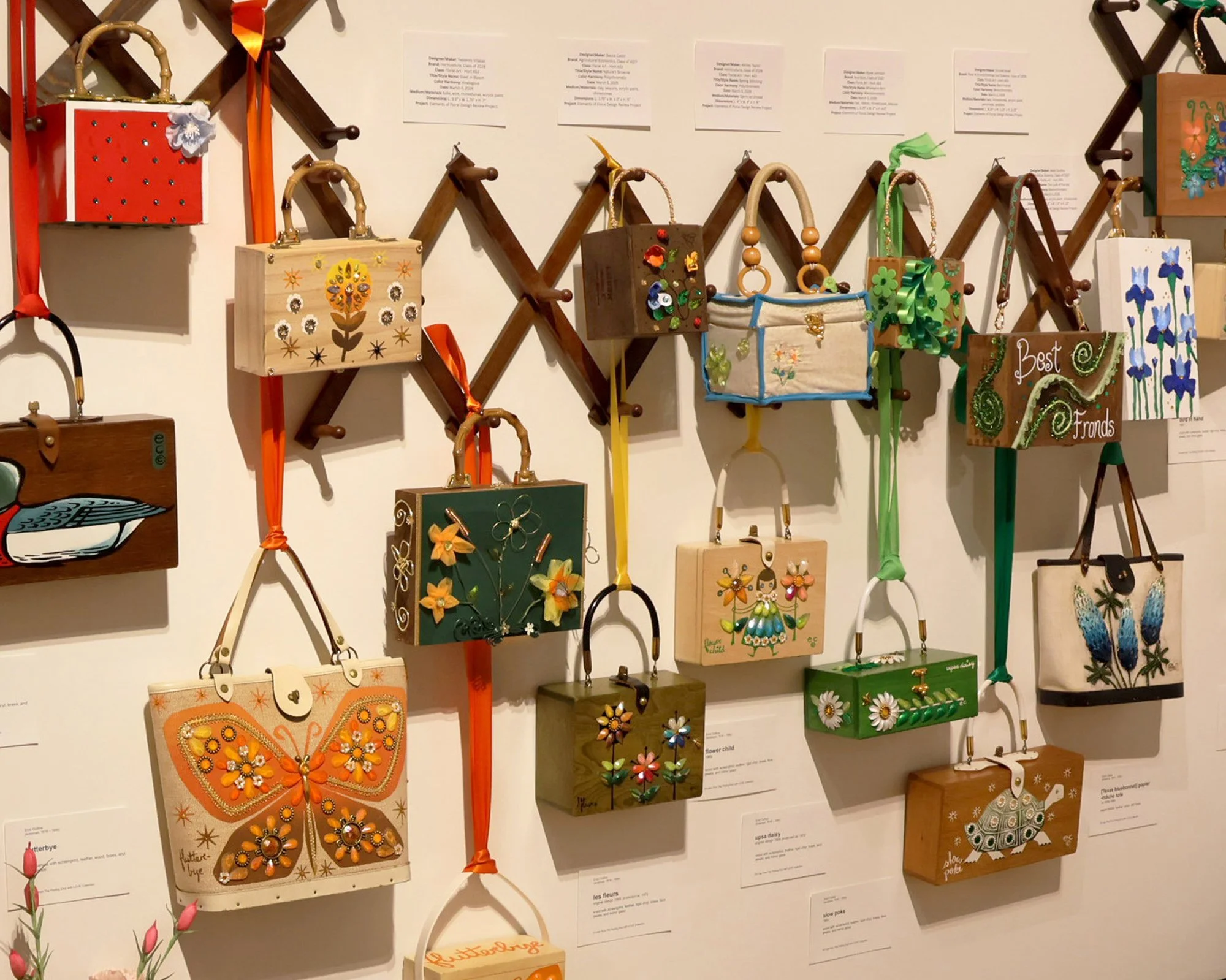
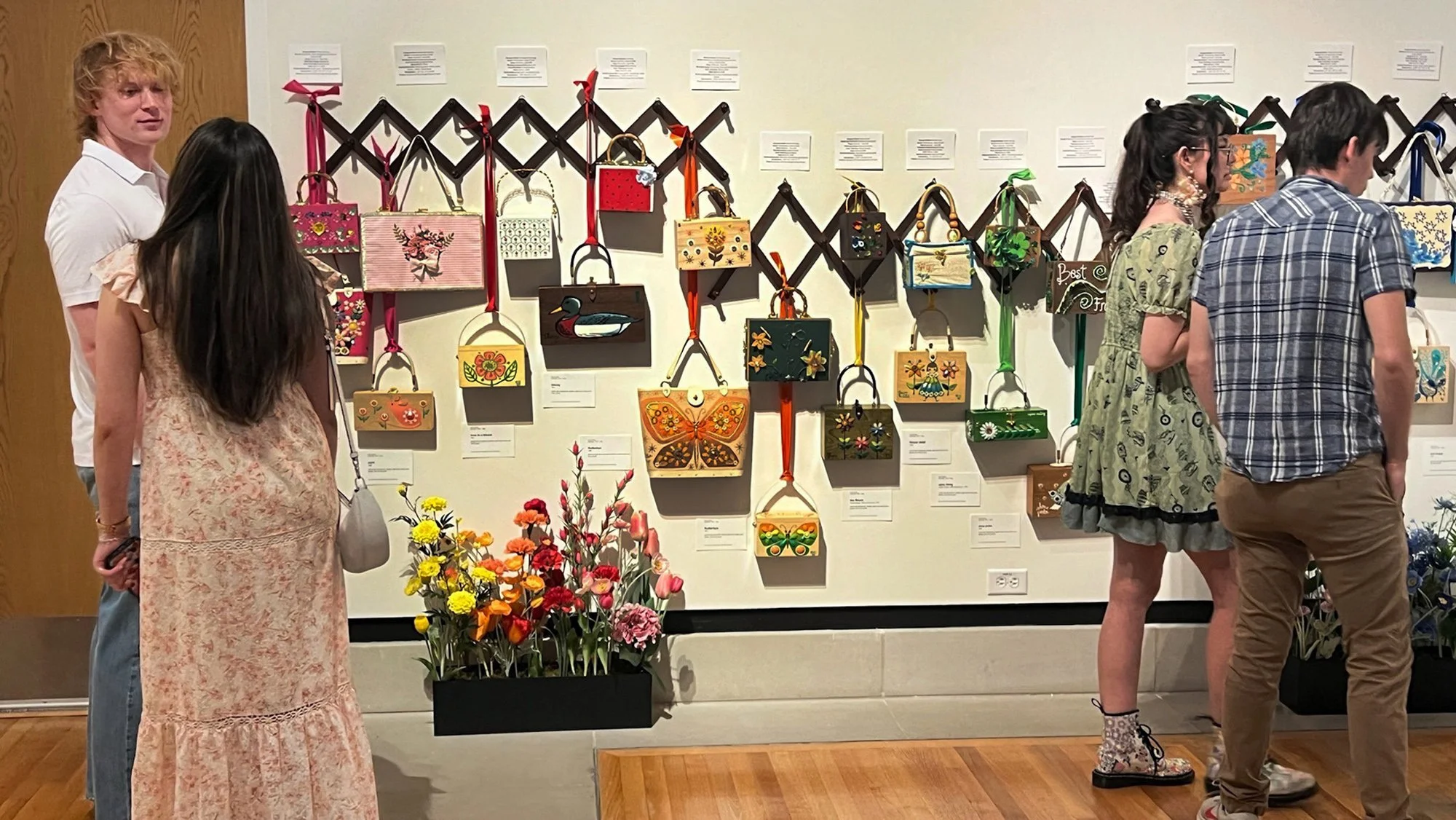
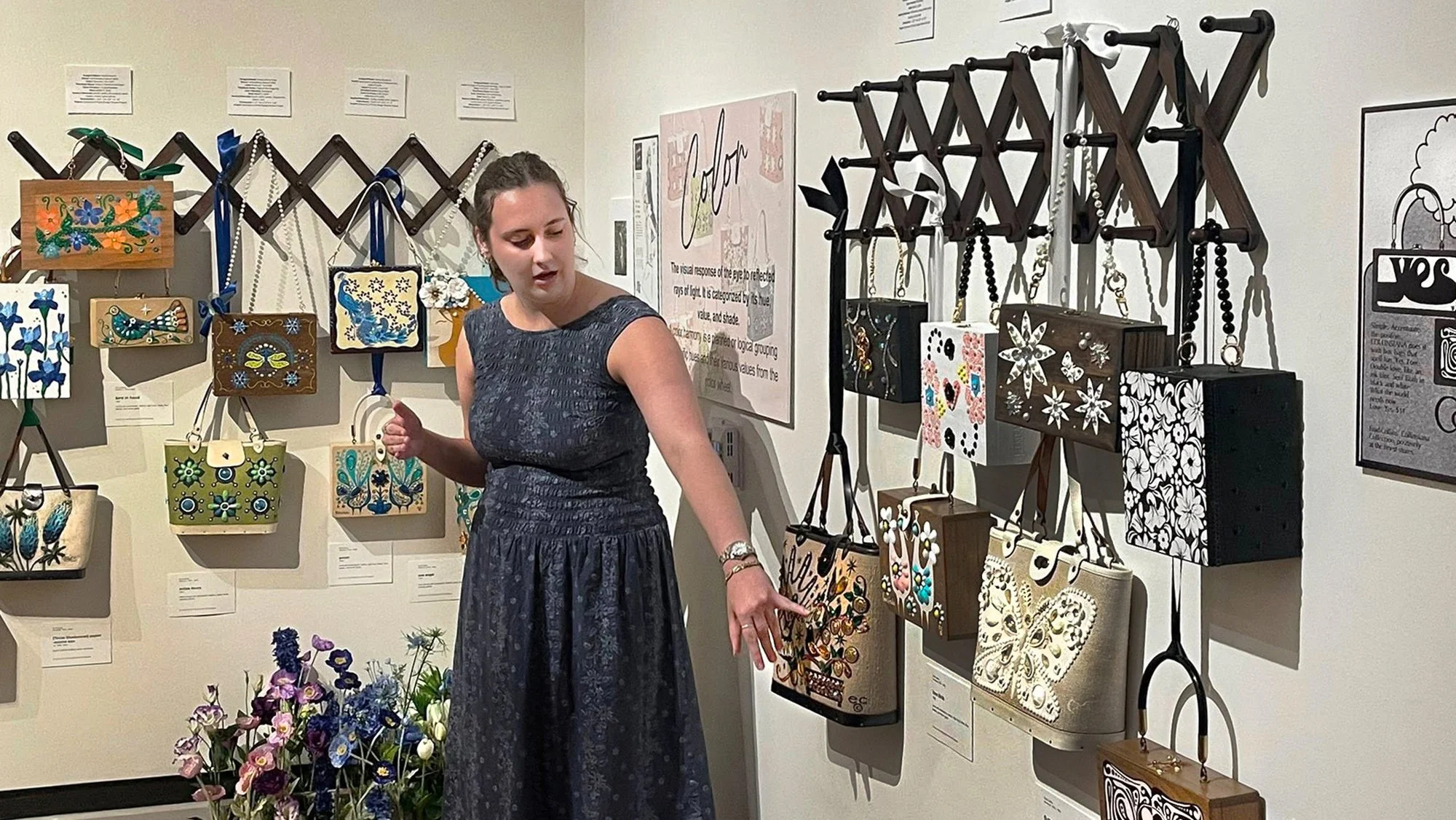
The Color Element installation cleverly revives folding accordian peg boards like those used in Collins of Texas showrooms in the 1960s. A rainbow of ribbons connects bags made by students to their Enid Collins inspirations.
Osburn worked with Adler over several days to select bags that would give students a wide variety of color schemes to practice, ranging here from polychromatic to complementary to analogous in warm and cool hues.
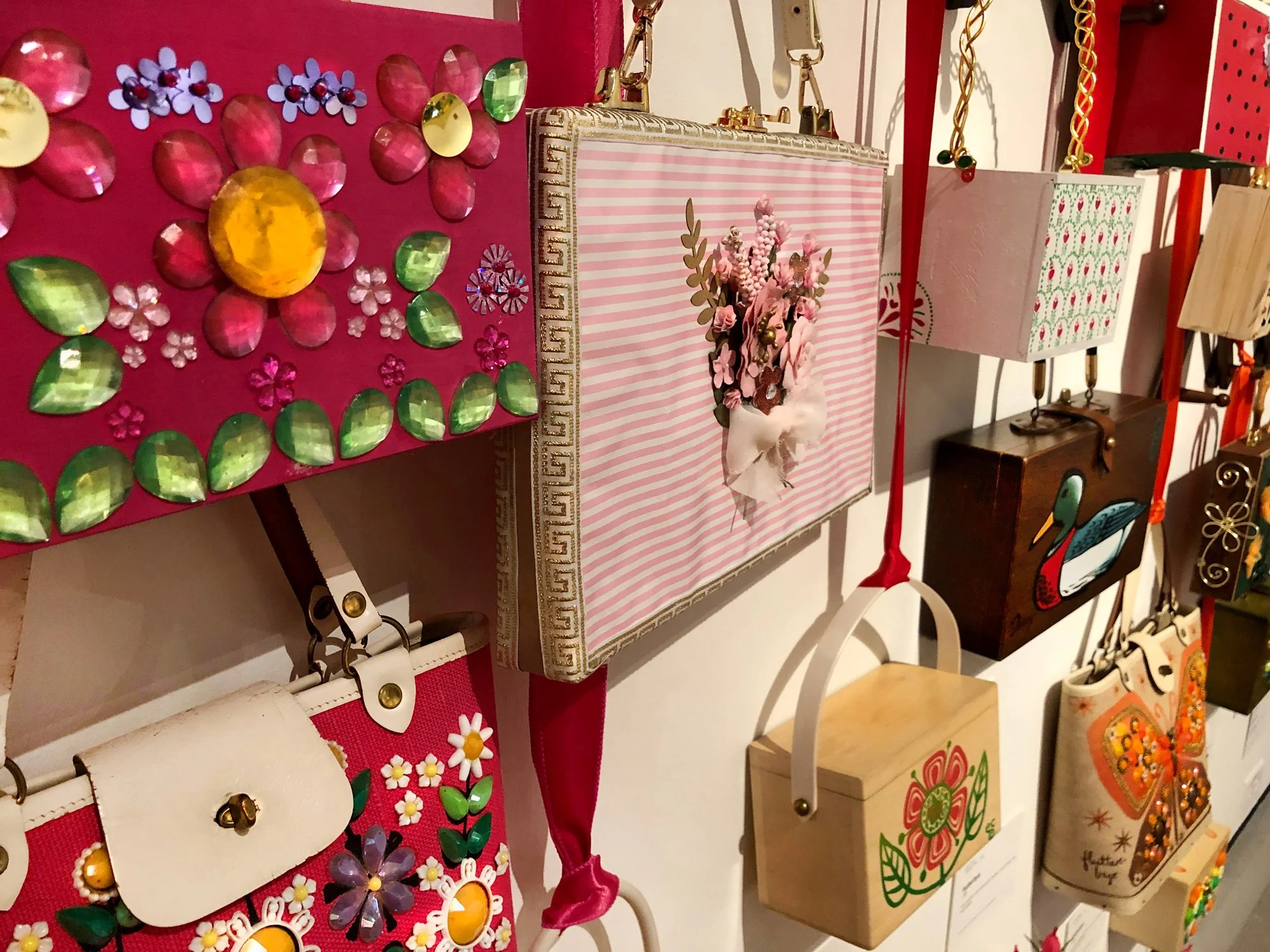
Closer view of designs by students (above) and Enid, using warm colors in polychromatic, complementary and analogous schemes.
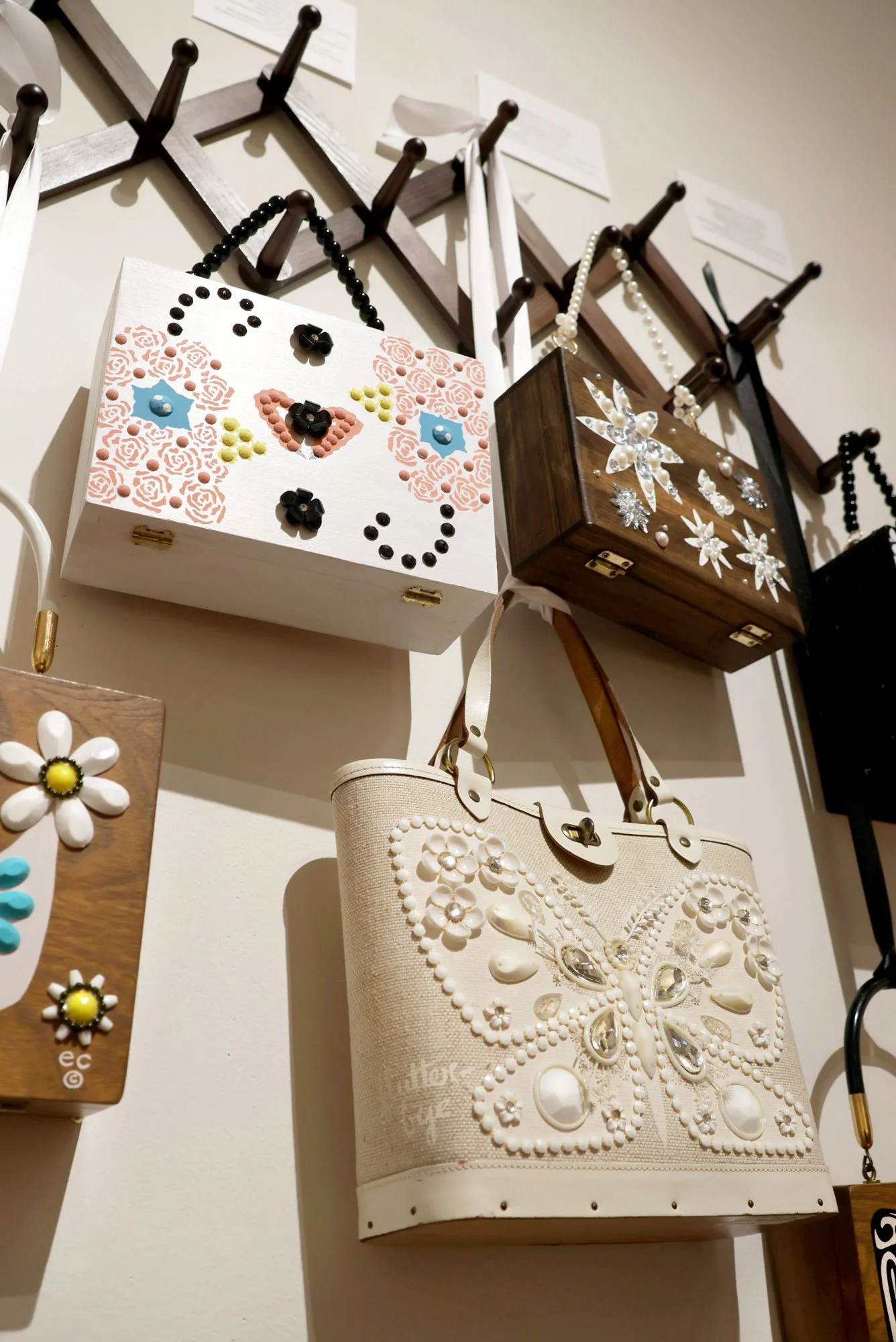
Enid’s 1969 “flutterbye” tote catches our attention with vibrant warm tones in an analogous color scheme. Her later 1971 box bag of the same name uses a tetradic one, with complementary colors that are evenly spaced on the color wheel.
A lovely lesson in color theory.
Brooke Isbell’s “Best Fronds” bag reflects the color scheme of Enid’s popular “upsa daisy” bag, and nails her wit with a clever floral pun.
“upsa daisy” mini coffin-style box bag by Enid Collins, ca. 1972 from a 1968 design.
Show goers taking in the color.
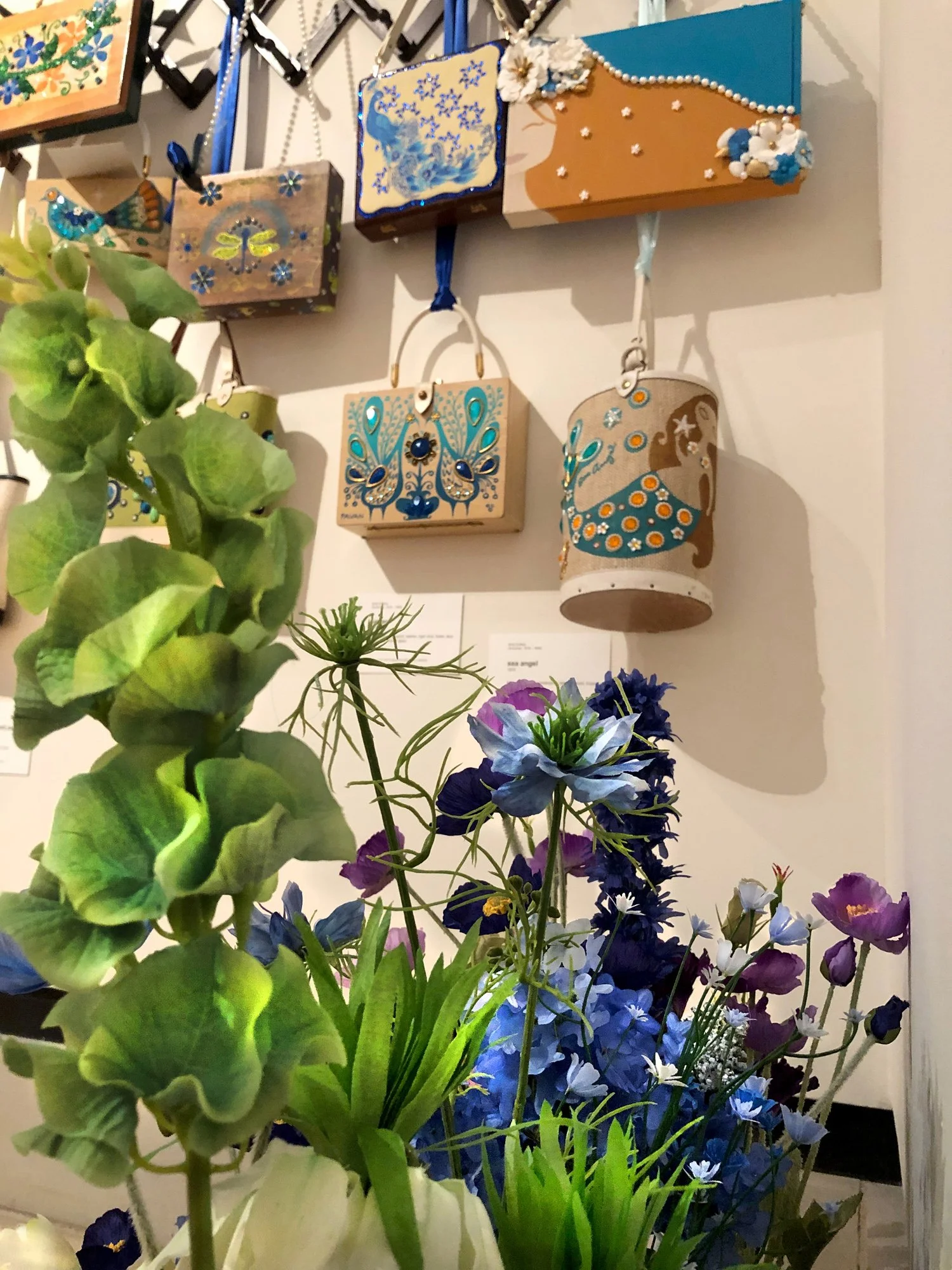
The cool end of the Color Exhibit spectrum.
More student bags with their Enid inspirations.
Students also created floral arrangement that mimic the bag display’s color variations.
“Flight of the Dragonfly” by Arianna De La Rosa catches a bit of the whimsy of Enid’s style, and a favorite theme, stylized flowers and insects.
Renee Bradicich’s “Royal Eight,” a gorgeous interpretation of Enid’s “pavan" (French for “peacock”).
“milles fleurs” canvas tote by Enid Collins for Collins of Texas, 1972
“bird in hand,” mini box bag by Enid Collins for Collins of Texas, 1967
Floral Art student Carter Wood talks about how she and classmates interpreted Enid’s works for their own bejeweled designs.
The collection also provided many pieces of vintage advertising for the exhibition.
Display of bags by students and the Enid inspirations using neutral and achromatic color schemes.
“The Blossom of Love Between Birds” by Eliza Oberle (left) uses a soft pastel scheme to convey emotion, while Carter Wood’s “Floral Fly” puts a twist on Enid’s “flutterbye” while keeping with the same achromatic scheme.
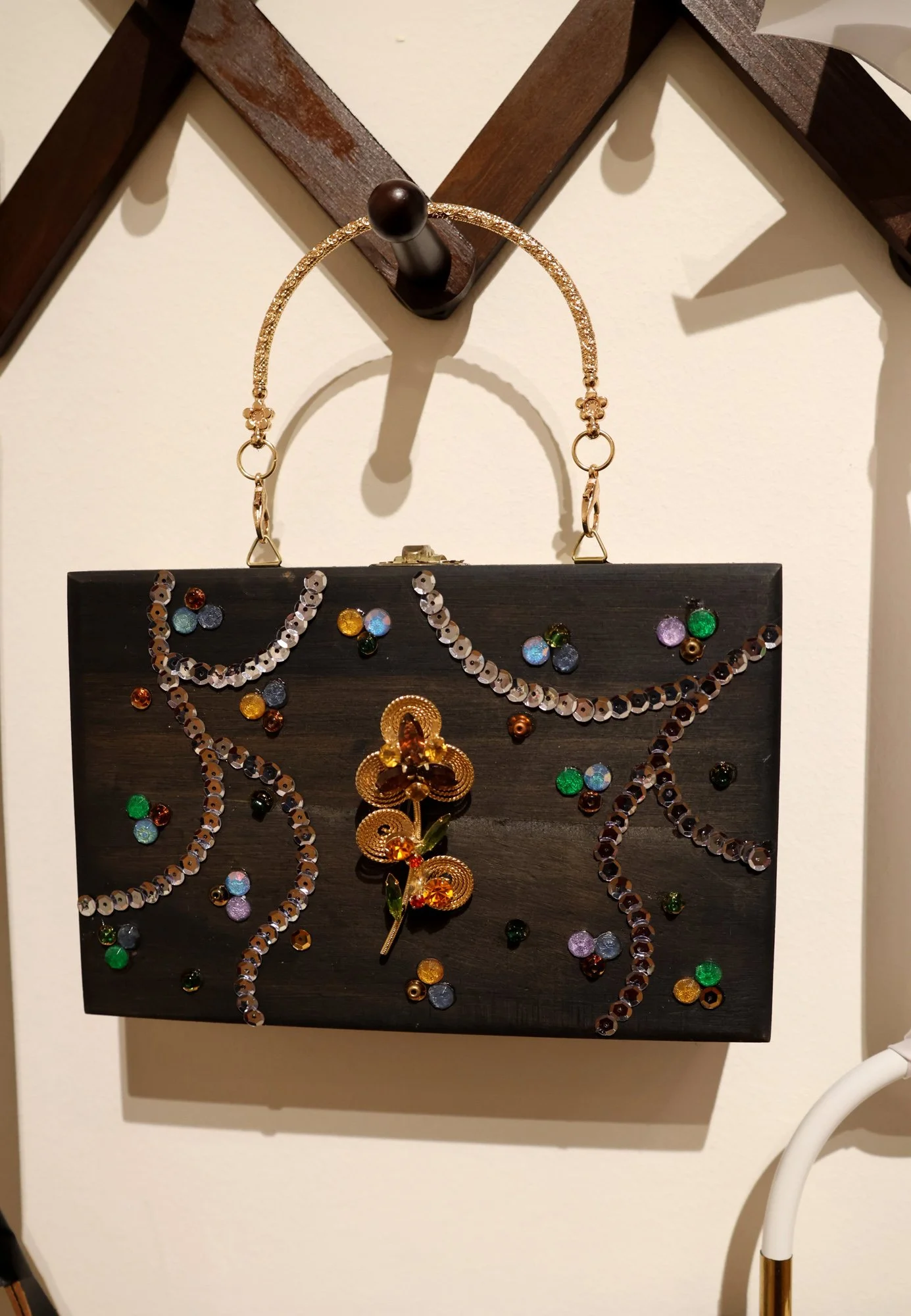
Glittery “Blossom Amid the Buds” by Grace Hye.
As in other designs on the subject of money, Enid often used flashy gold color schemes to draw her audience, with a wink.