Elements with Enid: Pattern
Pattern describes a repeated combination of one or more elements–line, form, color, texture or space–in a composition. Patterns create a sense of rhythm and visual interest that human senses are tuned to pick up on. Studying Enid’s “money tree” designs across handbag styles and eras, students discovered how any leaf or coin used more than once suggested a pattern. Enid’s ultimate money tree designs convey a feeling of luxurious abundance. Patterns may be formed by repetitions of leaves, petals or stem lines, perceived as:
The silhouette of a flower or an arrangement as observed against its background, including solids and spaces
Click on image to start slideshow.
A floral celebration of prosperity, purses and puns.
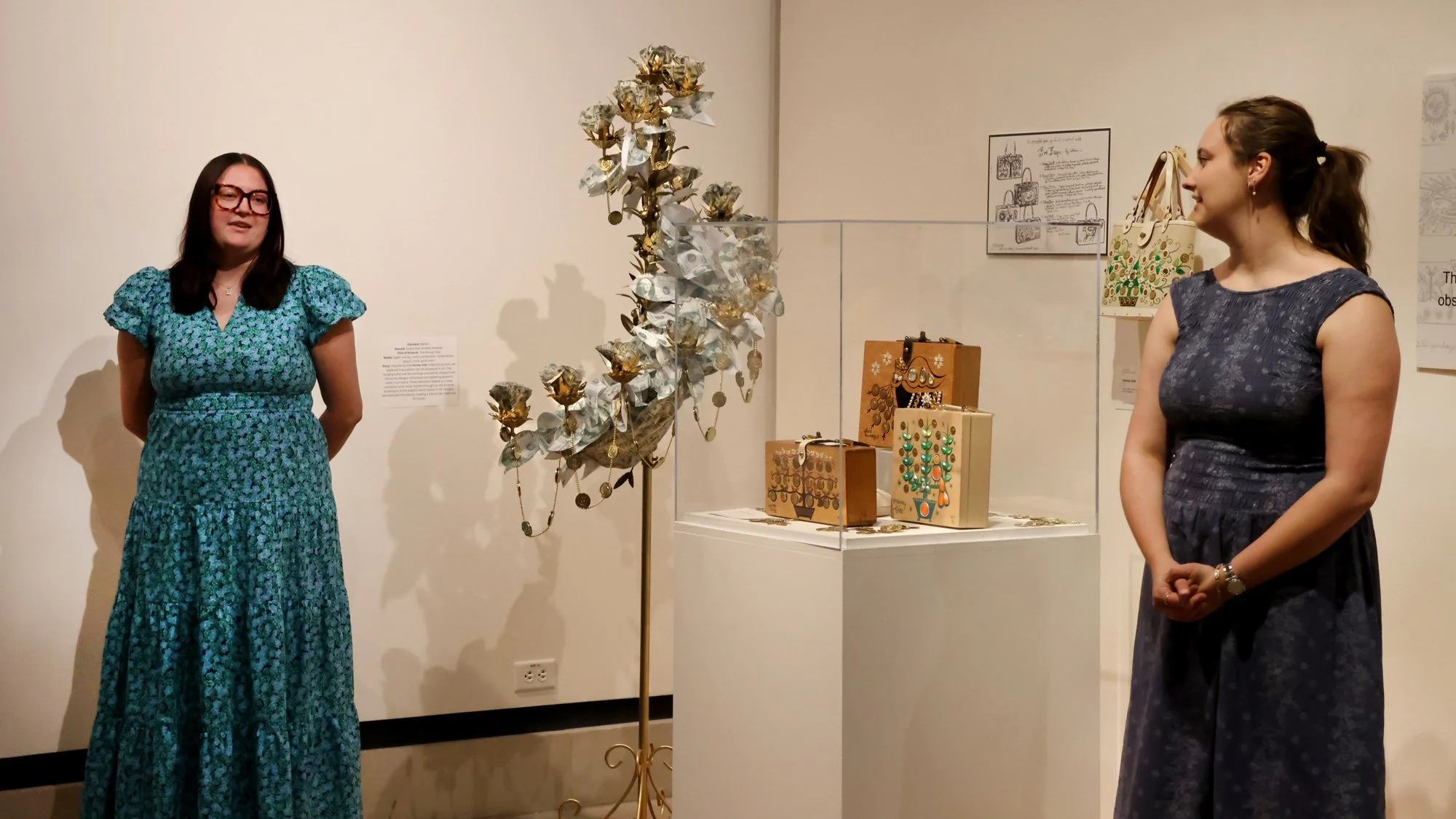
Floral Art students Kindall Zemanek, a graduate student in the university’s Hospitality, Hotel Management and Tourism program, and Carter Wood introduce “The Money Tree,” a spiraling gilt interpretation of Enid’s theme. (Grace Hye collaborated on the piece but was unable to attend.)
Building on Enid’s playful use of words, the students extended the idea of “money doesn’t grow on trees” by creating a large-scale 3D tree bursting with phony-bill blooms and dripping gold coins.
Enid’s money trees influenced the design’s repeating patterns, established by hanging coins, paper-money roses and a repurposed swirling candlestick.
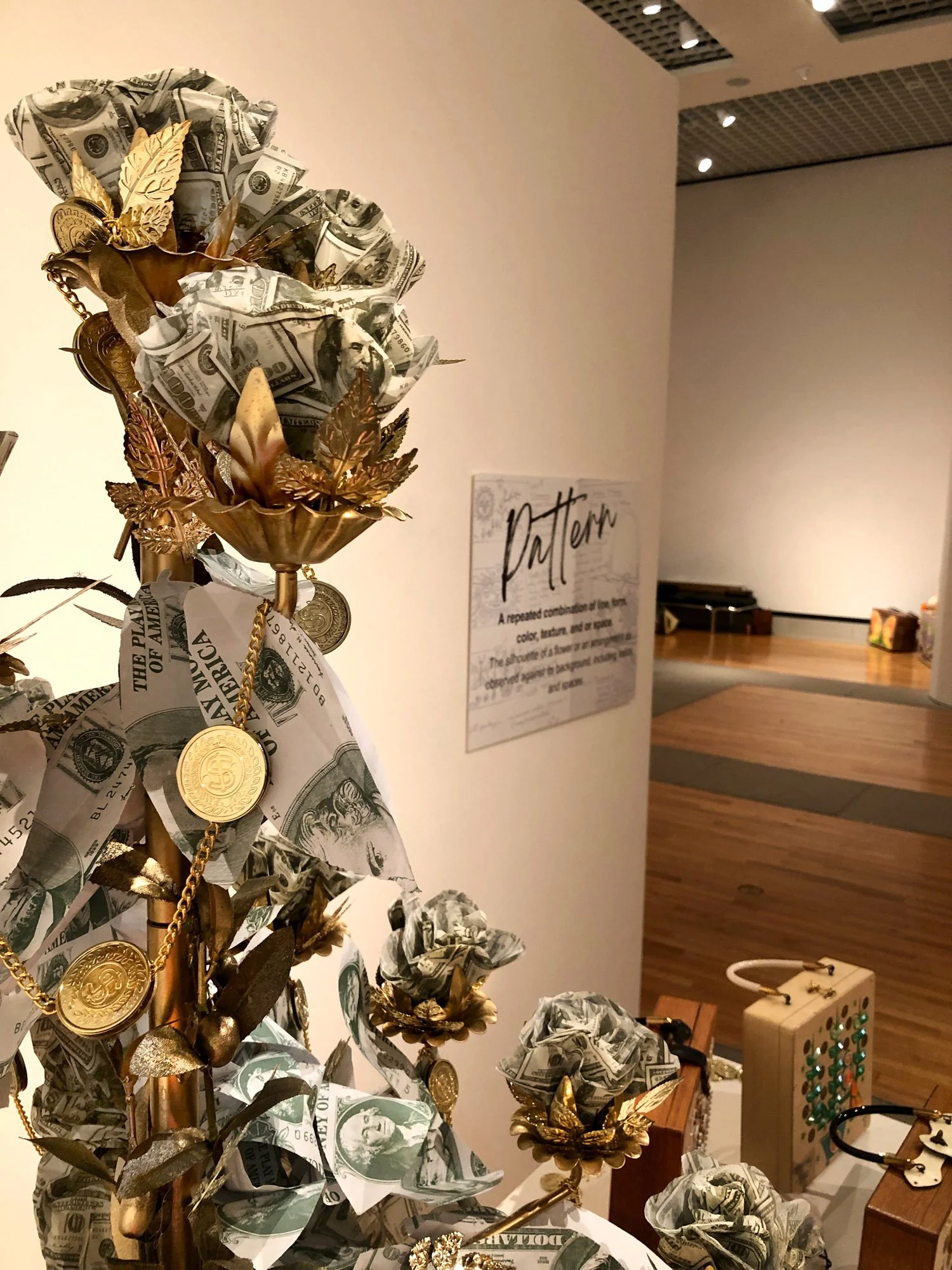
Repetitions of coins, chain, golden leaves and money roses create movement and visual rhythm throughout the artwork.
Detail of a “Money "Tree” rose.
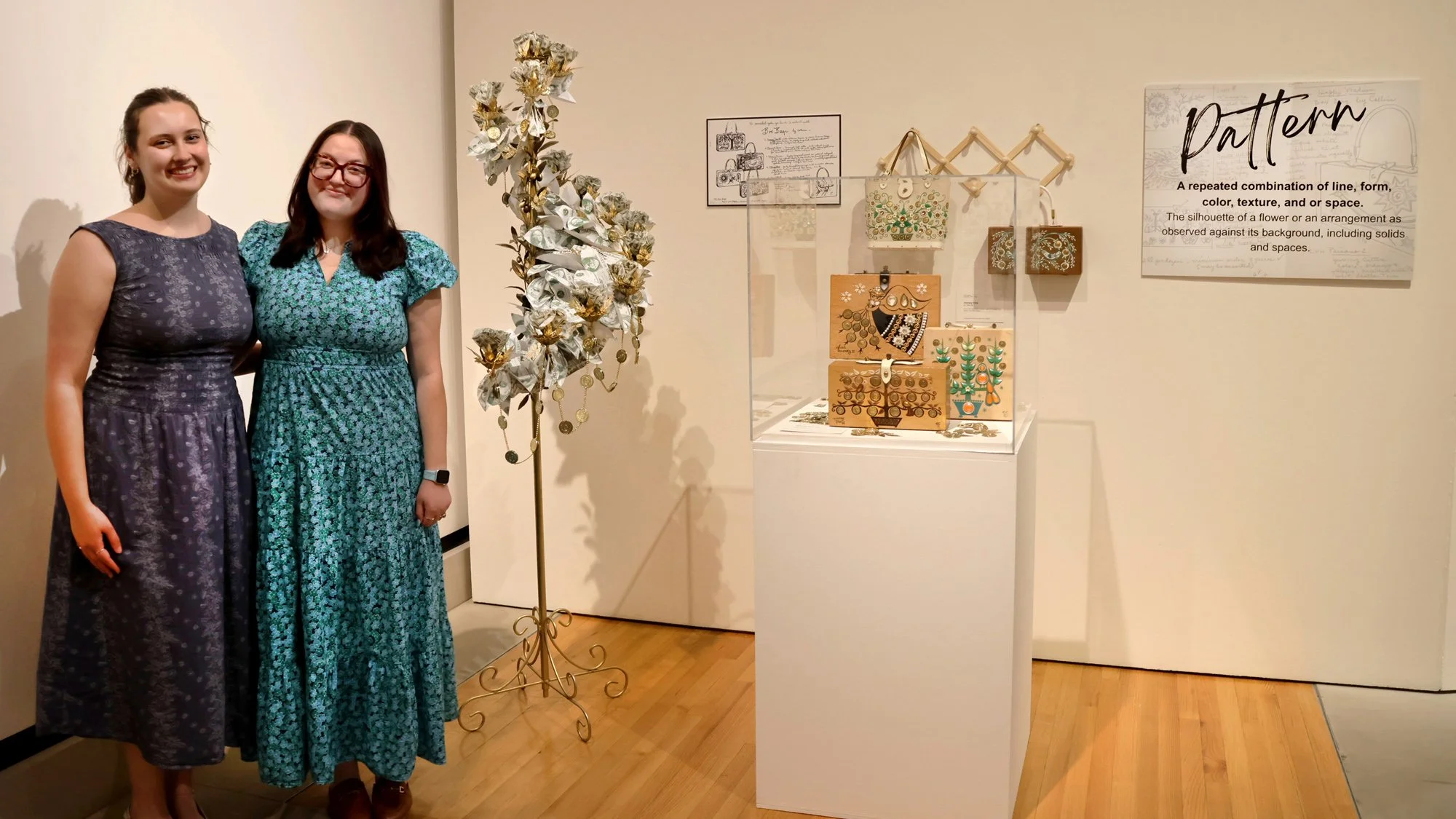
Floral Artists Carter Wood and Kindall Zemanek.
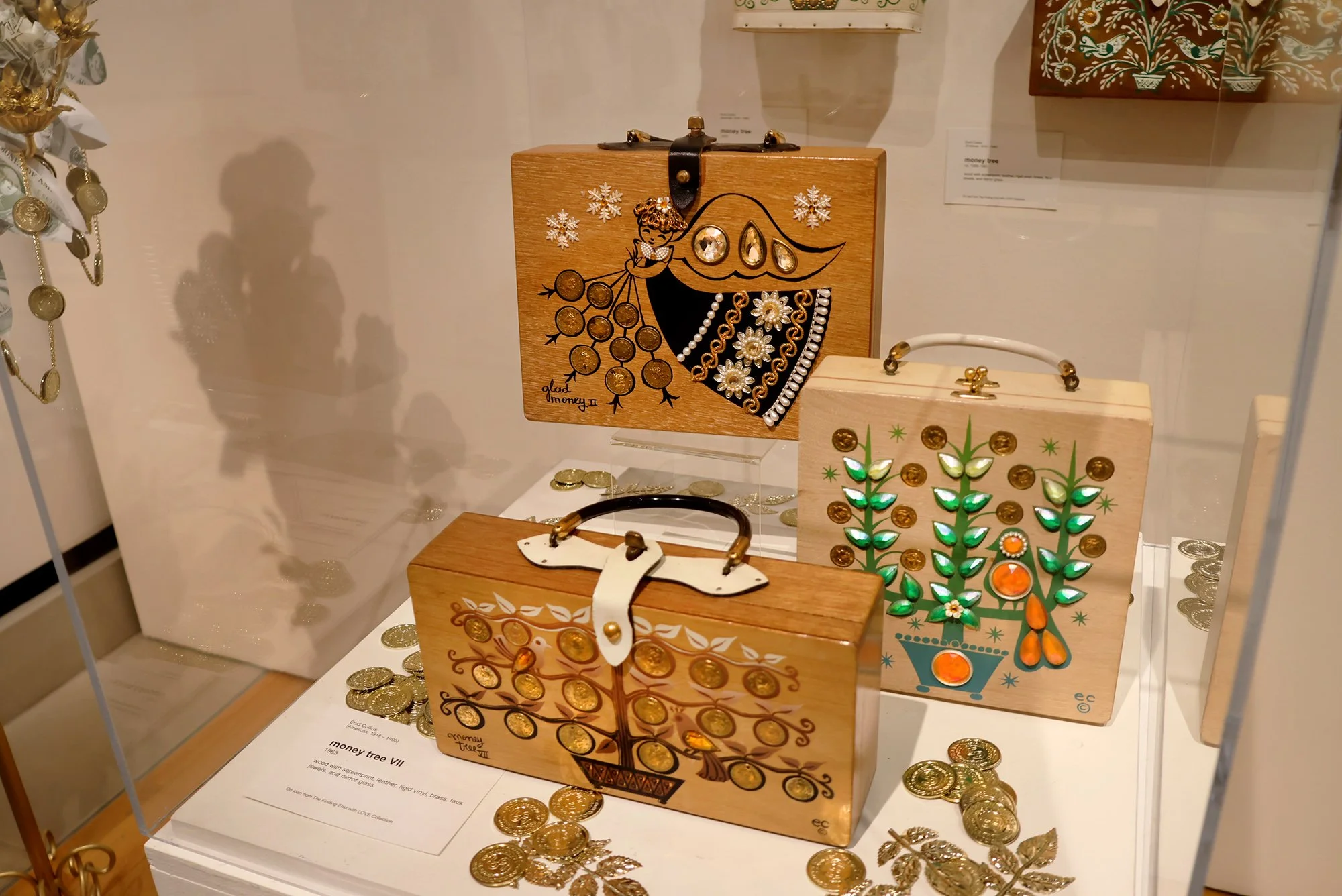
“The Money Tree” and the bags that inspired it.
Money bags (clockwise from top): “glad money II” box bag (1964), “money tree” box bag (1967) and “money tree VII” (1963).
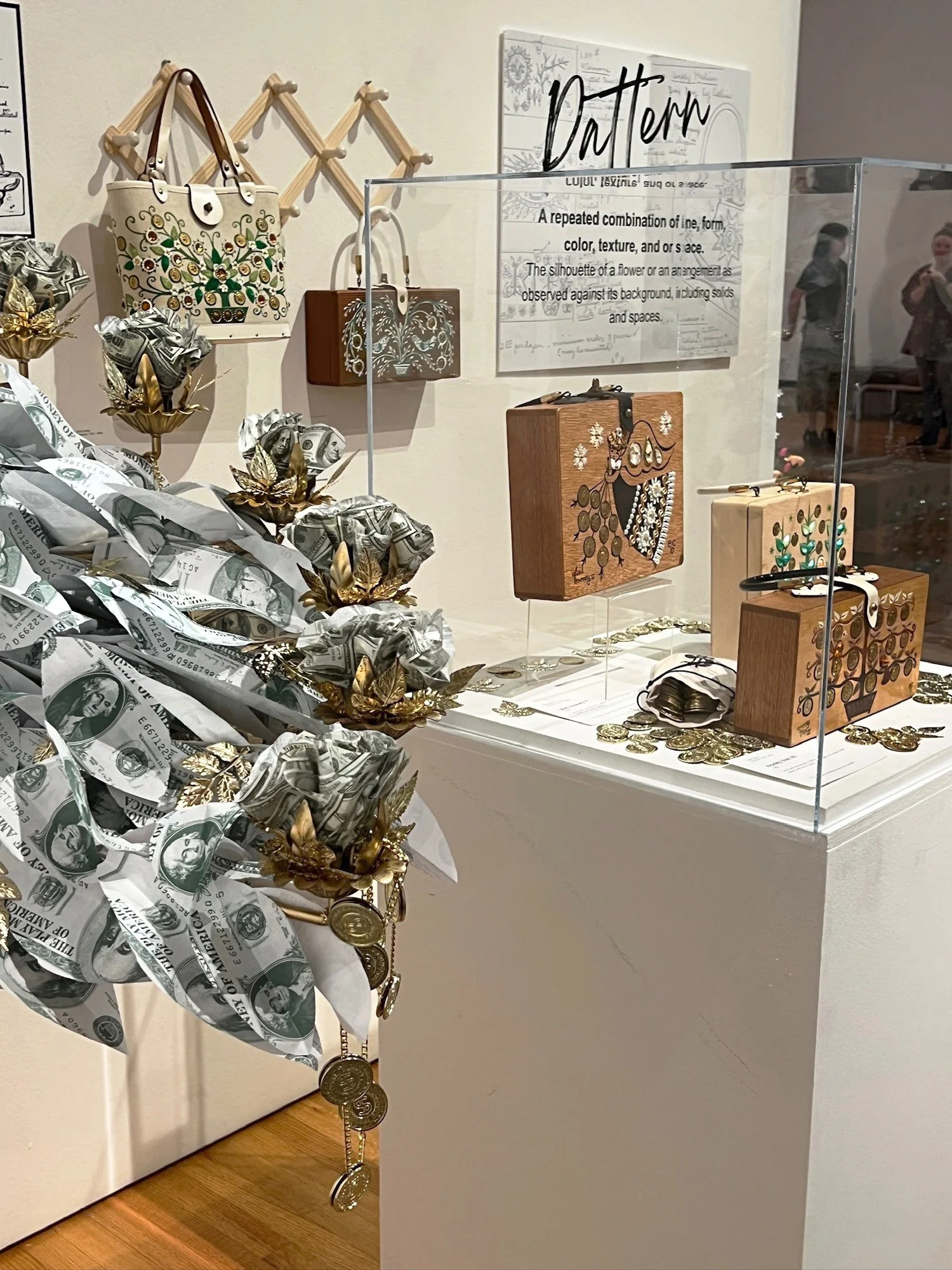
Detail of bag exhibit.
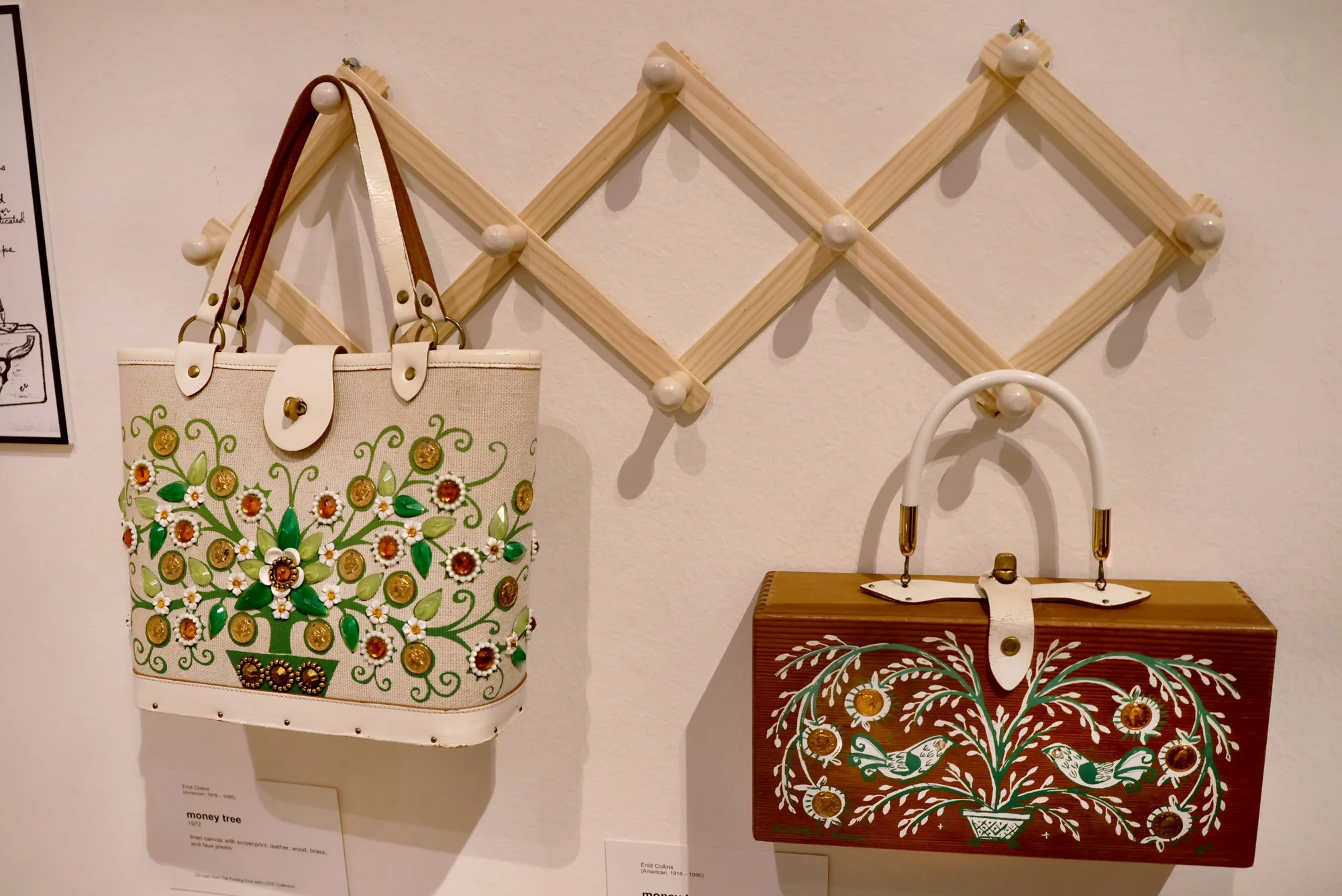
“money tree” linen canvas tote (1972) and “money tree” box bag (ca. 1956-61)