Elements with Enid: Texture
Texture is the surface quality of a material as perceived by sight or touch, such as smooth, glossy, rough, fuzzy or velvety. The texture of each material in a design may harmonize to create a pleasing sense of calm and unity, or contrast to provide tension and excitement. To understand and try their hands at using texture to represent their own ideas, students studied four decades of Enid’s designs, then created stunning fashion exhibits integrating period bags with florals and costumes.
Visual: perceived textures
Tactile: actual physical textures
Click image to start slideshow.
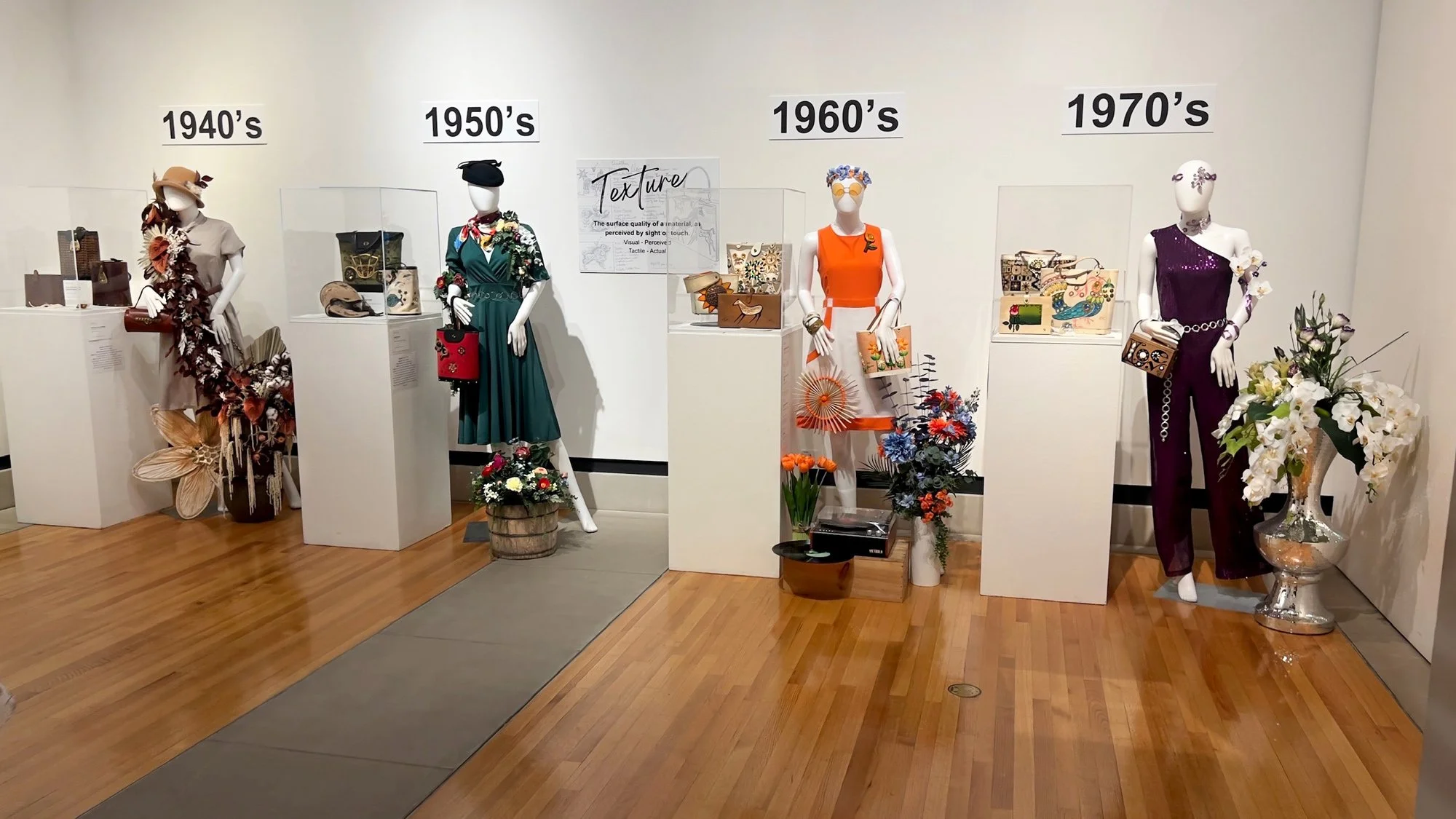
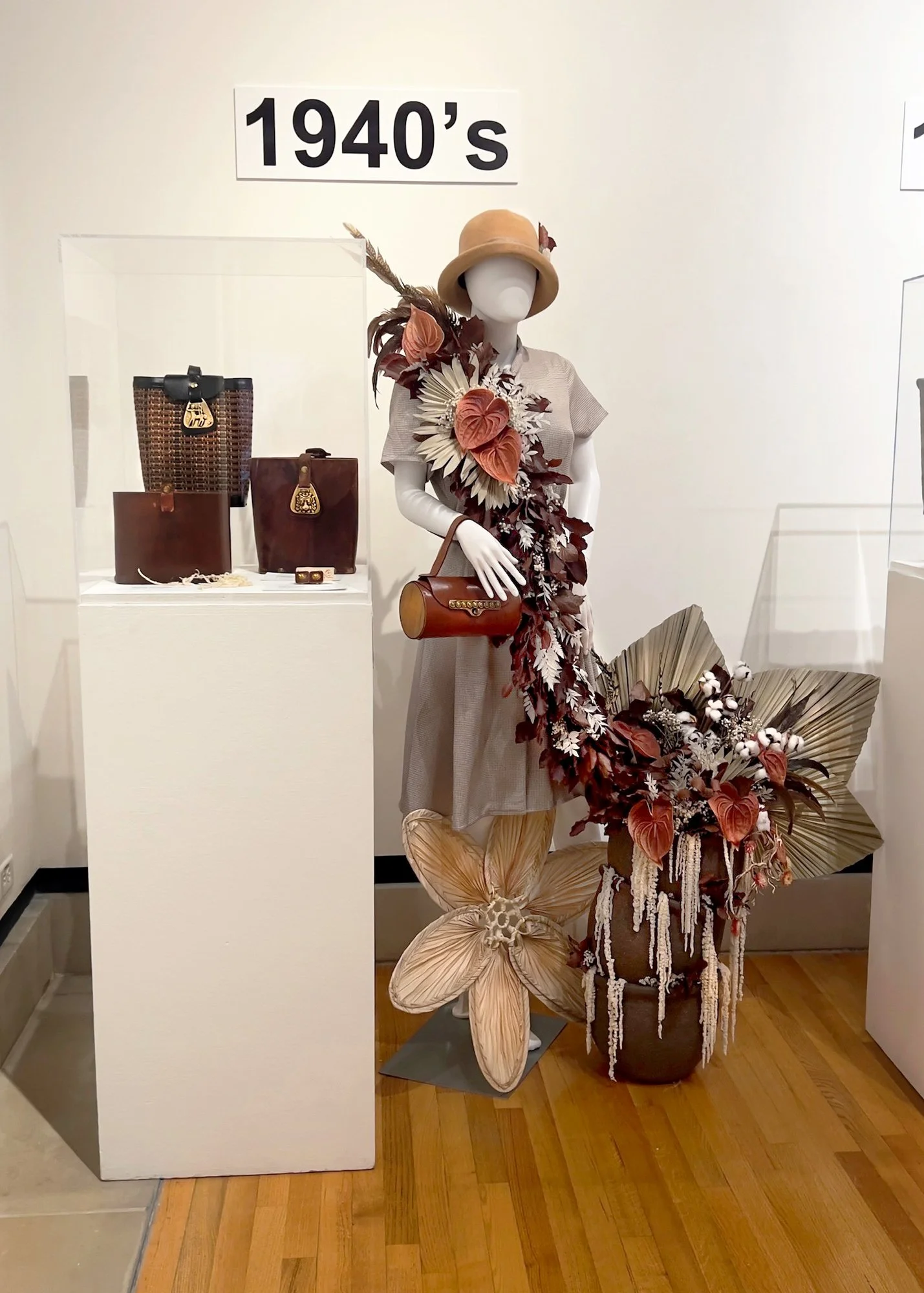
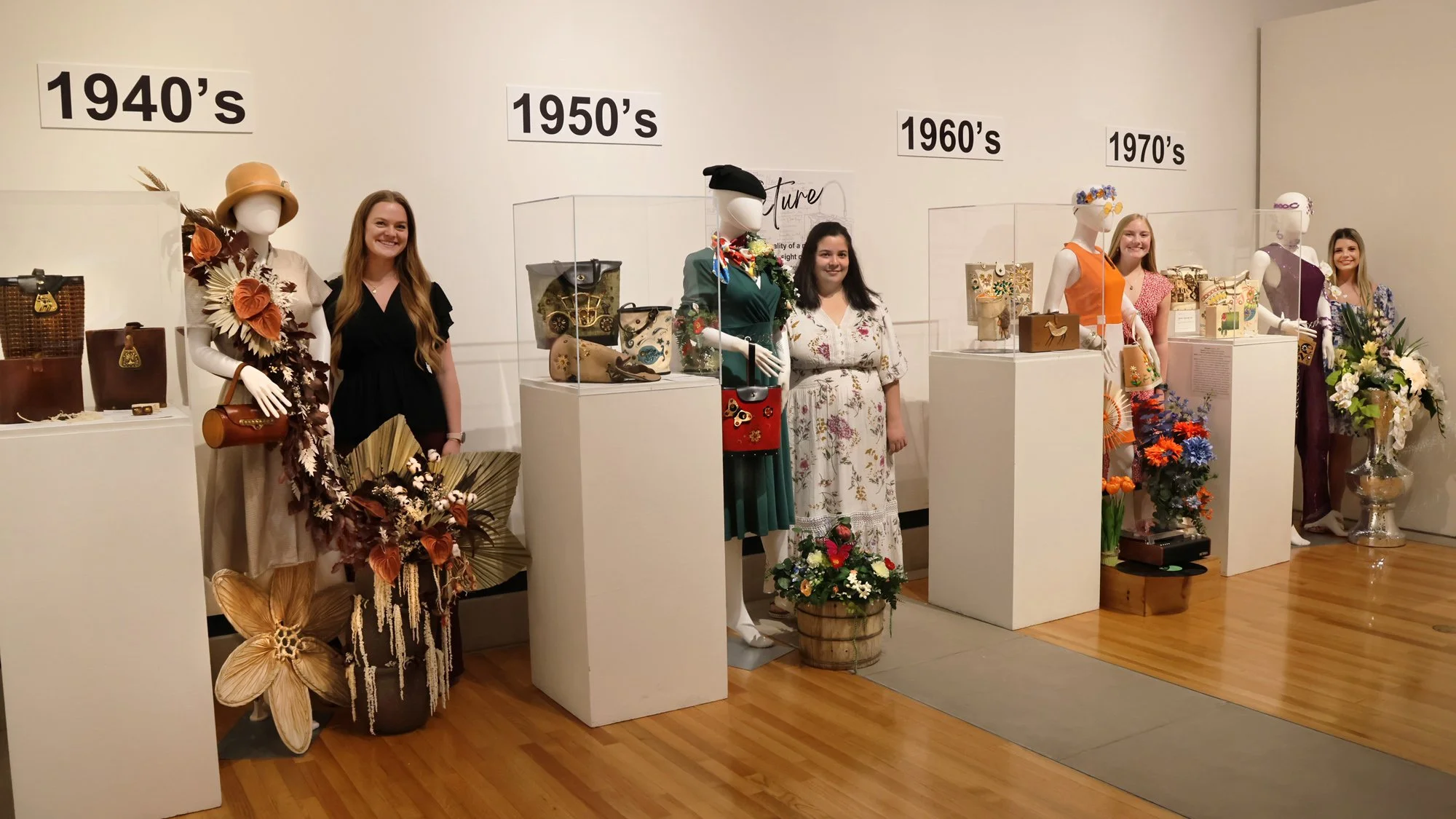
A fusion of flowers and fashion across the decades, inspired by the extraordinary evolution of Enid Collins handbag designs.
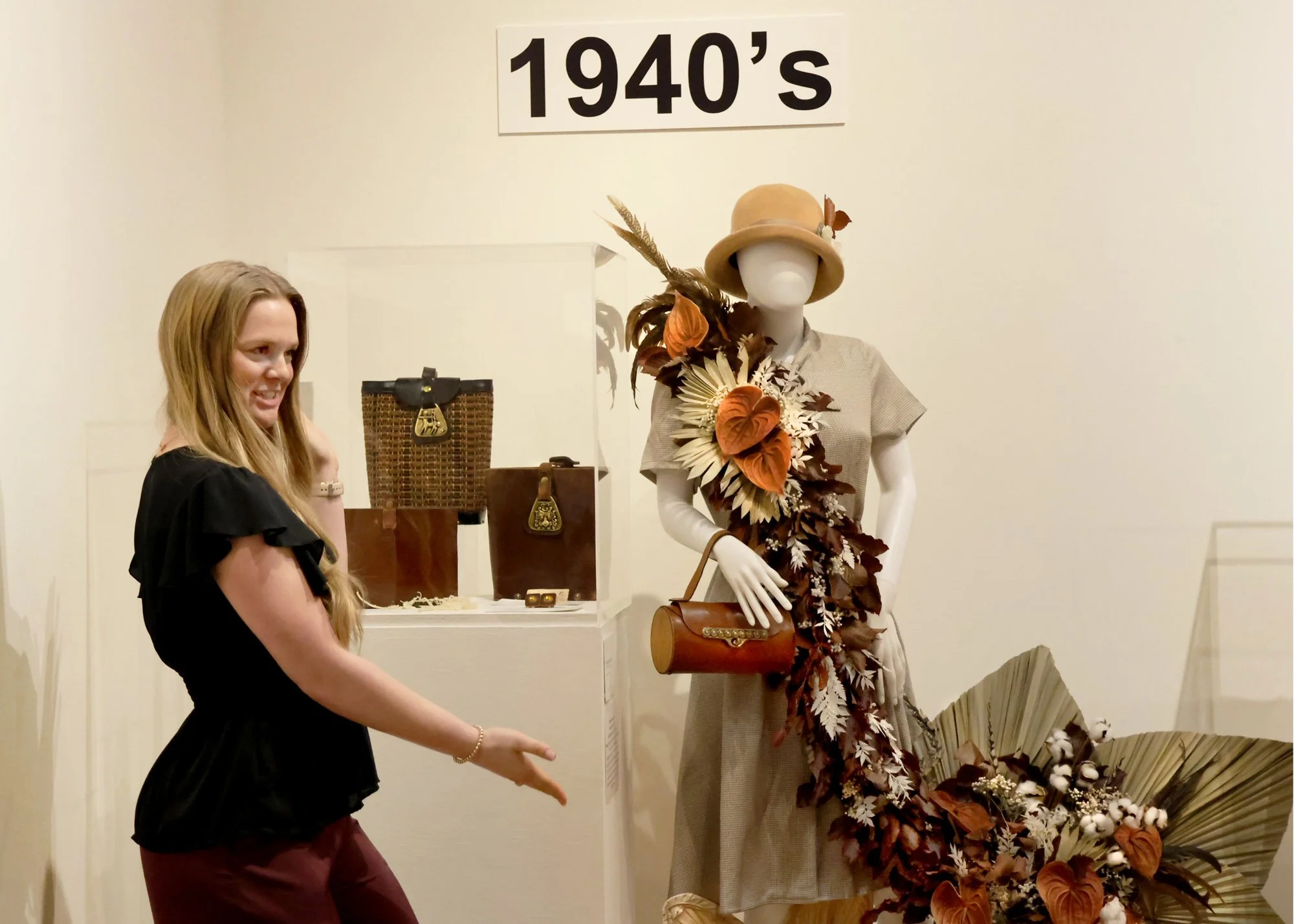
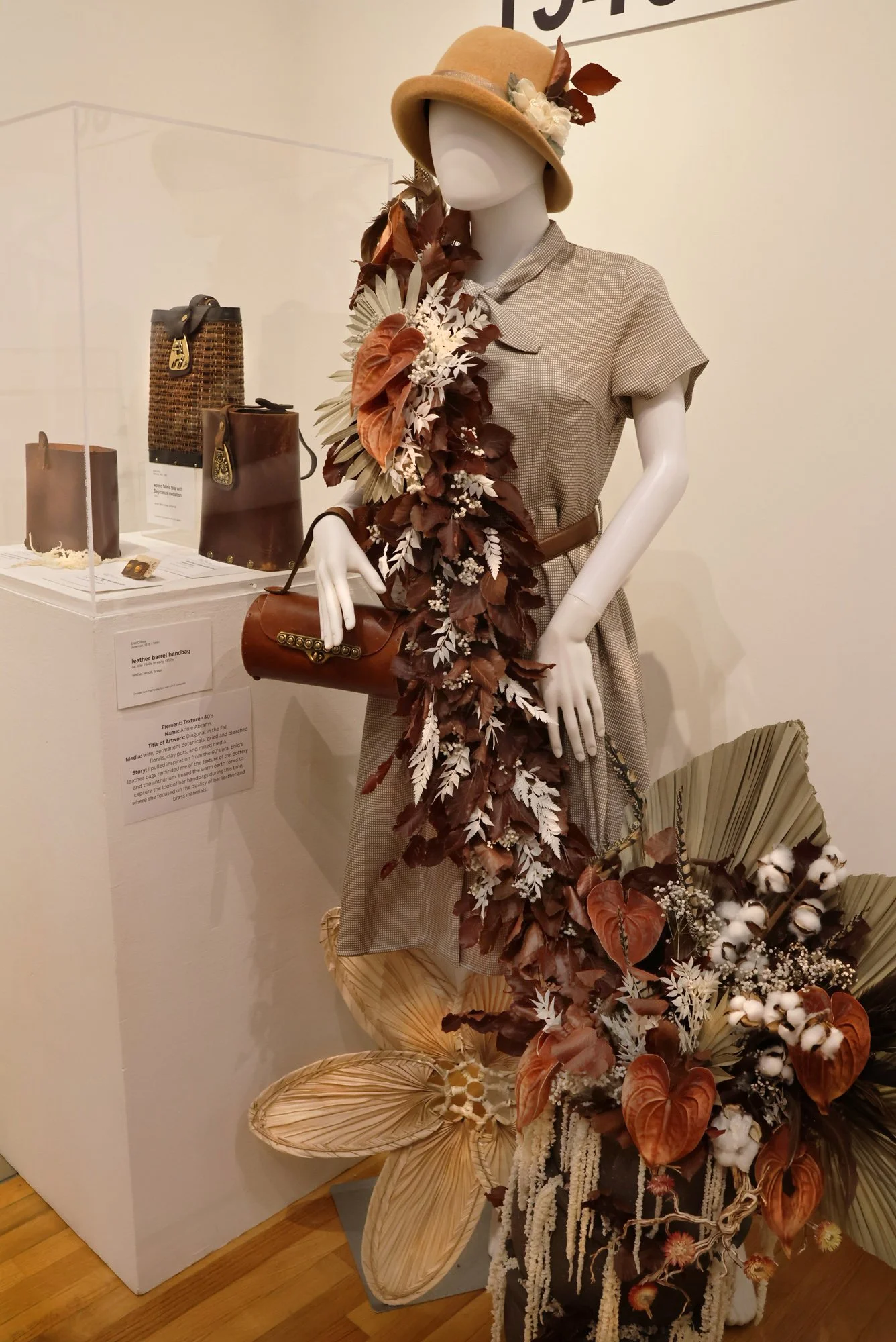
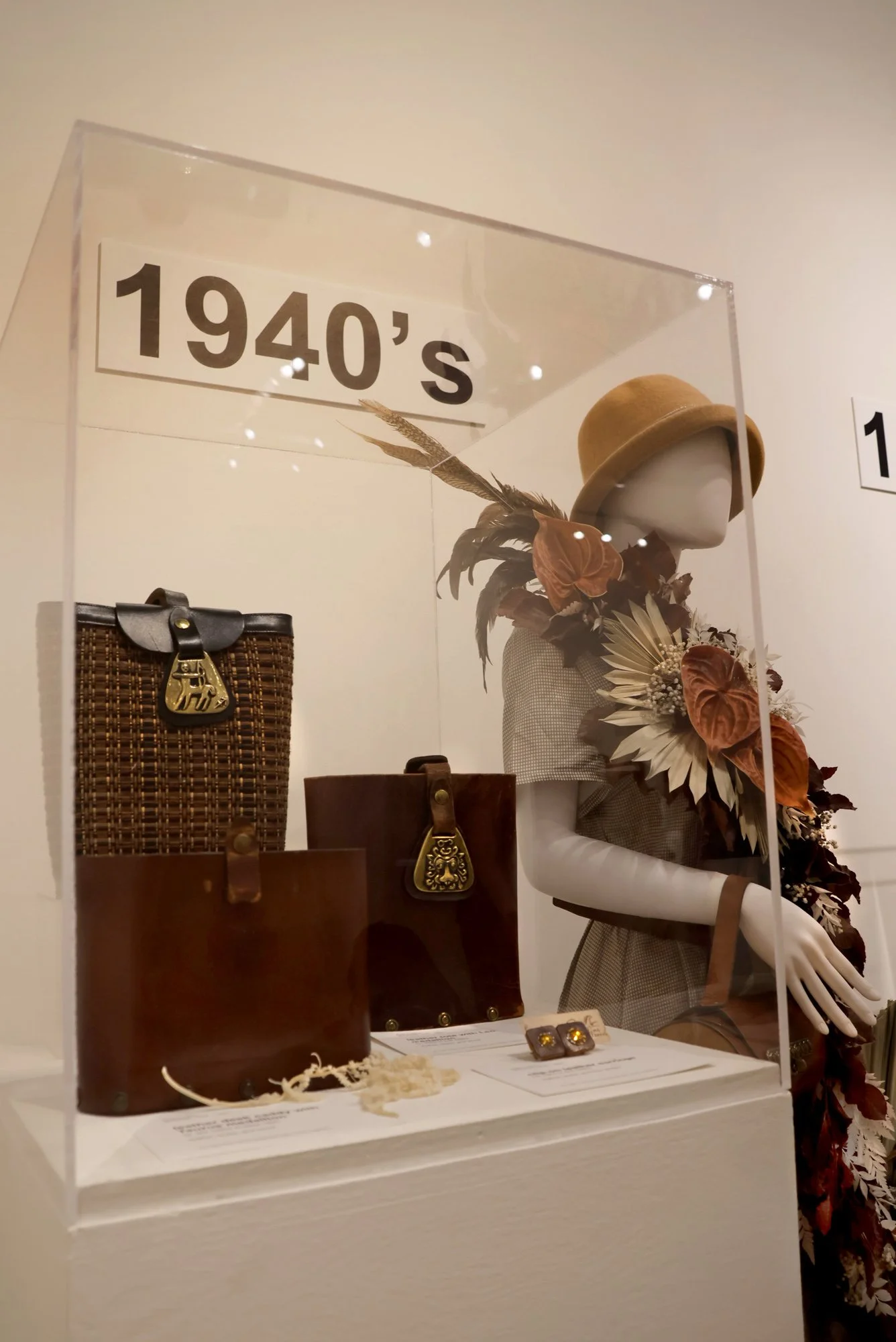
A stunning floral diagonal in warm autumn hues.
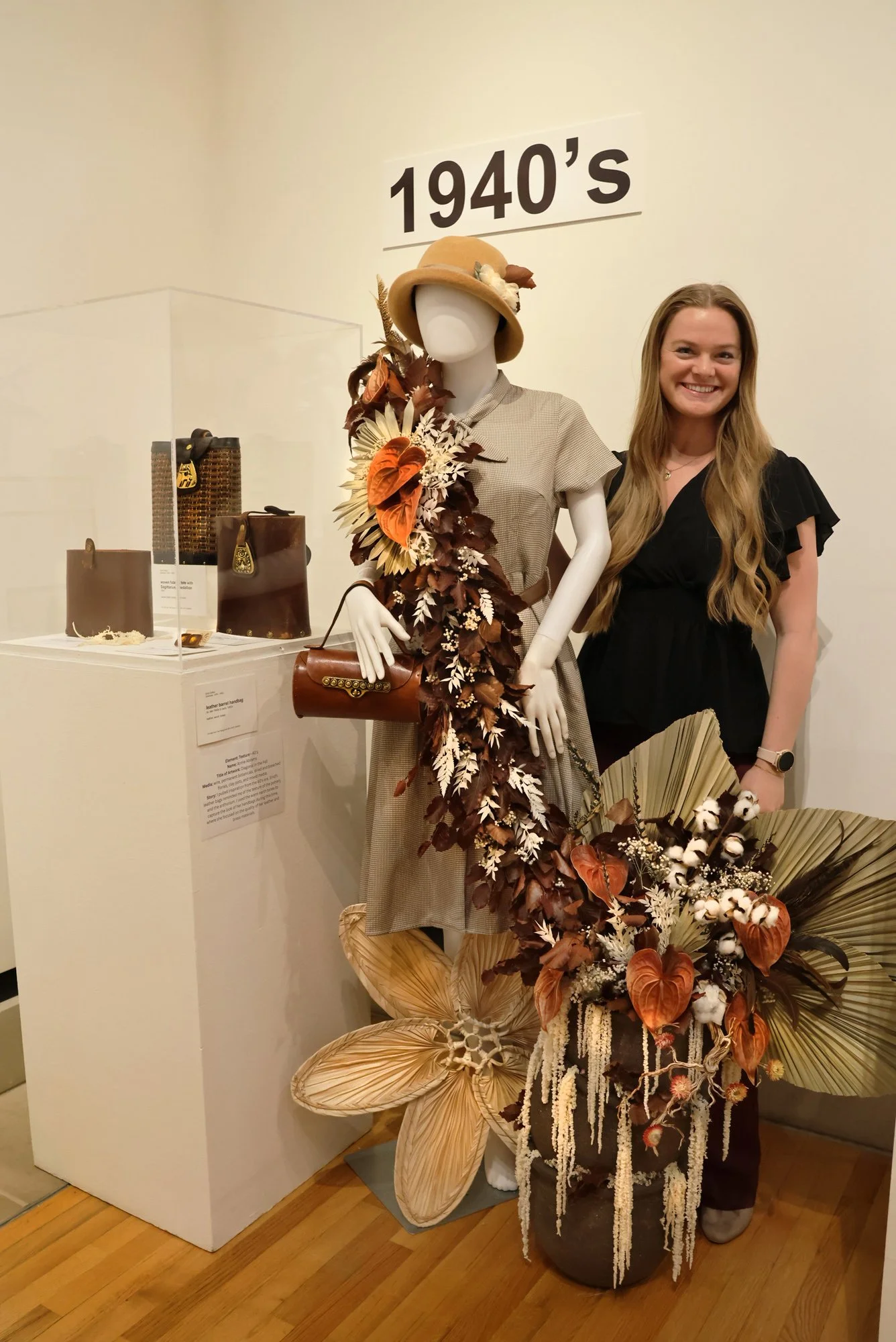
Floral Art student Annie Abrams , Horticulture major, presents her stunning piece, “Diagonal in the Fall.”
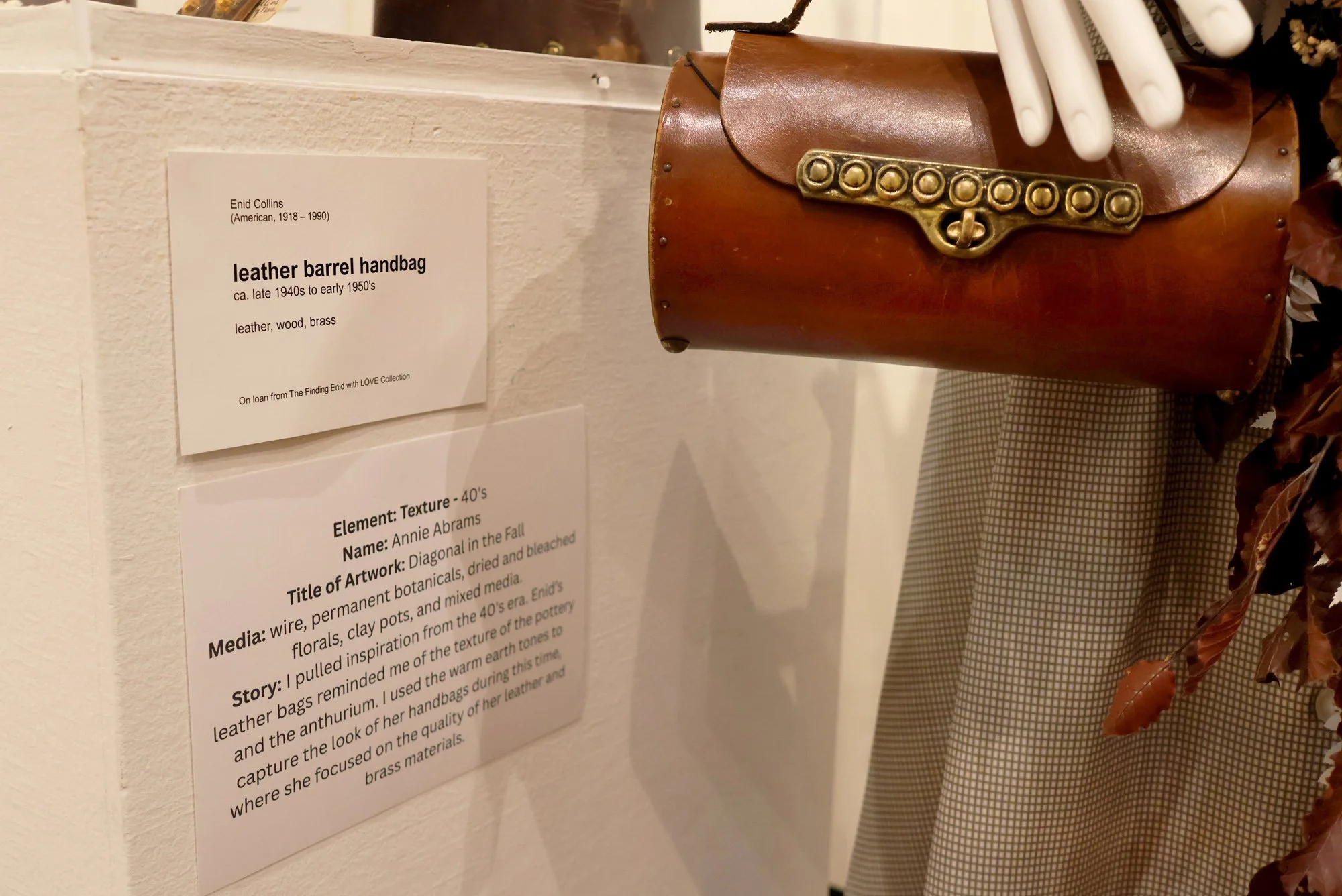
From the artist: “Enid’s leather bags reminded me of the texture of the pottery and the anthurium.”
Abrams used warm earth tones to capture the look of Enid’s handbags during the 1940s, when she and her husband, Frederic, worked together with a focus on quality leather and hand-cast brass.
Floral Artist Annie Abrams.
The bags (clockwise from top): Woven fabric tote with Sagittarius medallion (1953), Leather tote with Leo medallion (ca. early to mid 1950s), Clip-on leather earrings (ca. early to mid 1950s), Leather desk caddy (ca. early to mid 1950s)
Leather barrel handbag by Enid and Frederic Collins (ca. early to mid 1950s)
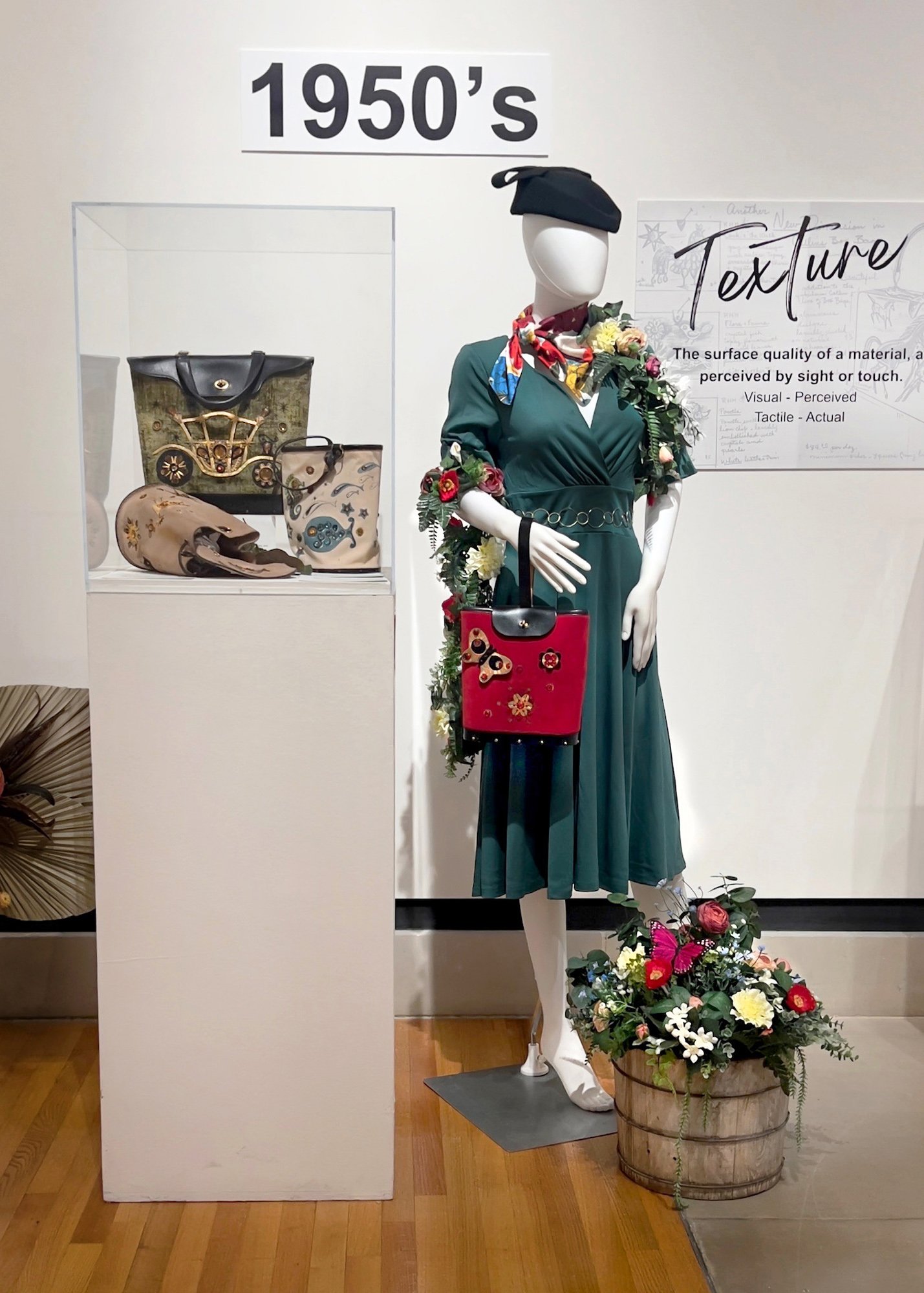
Foliage and florals combine with the softness of silk and suede.
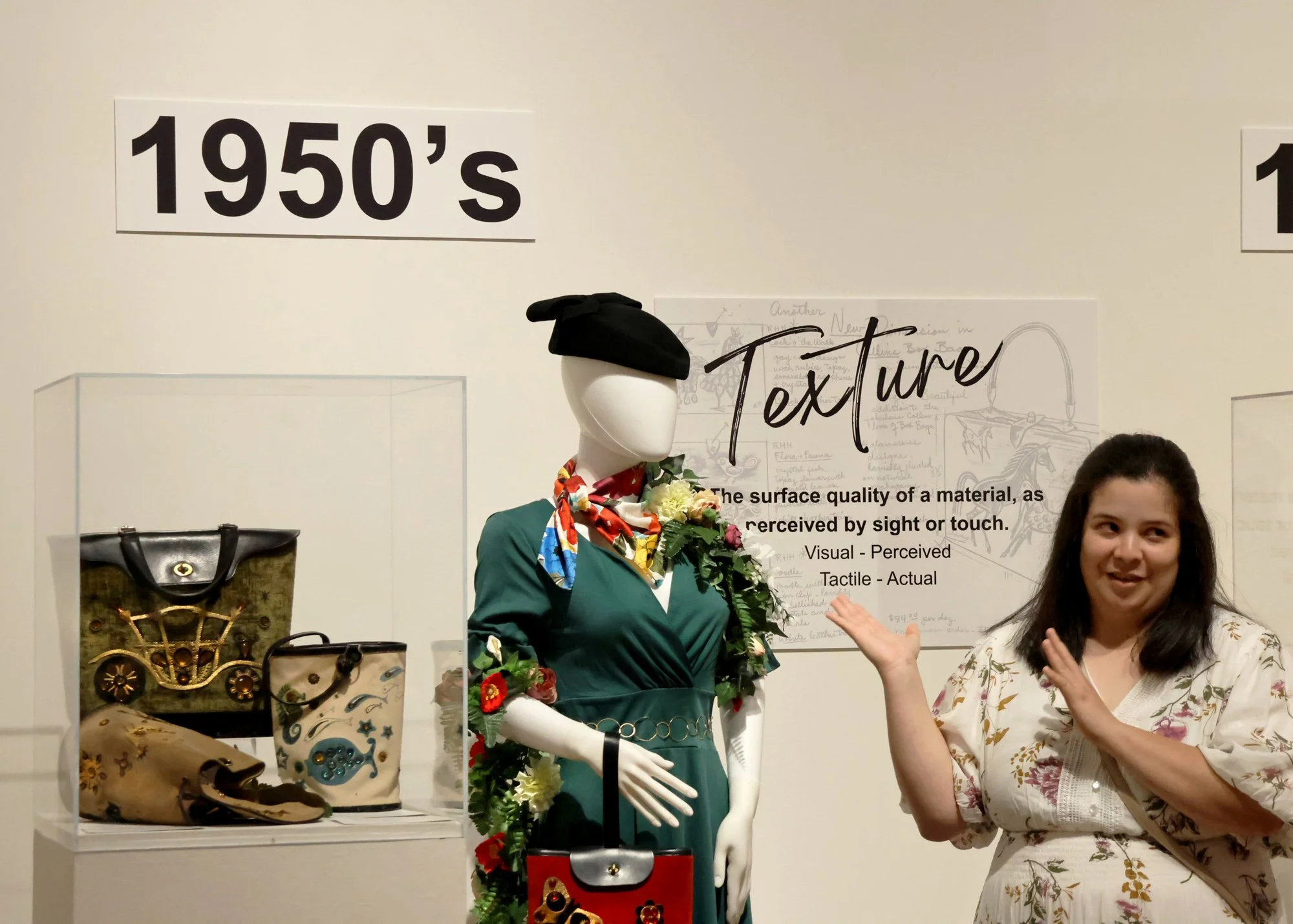
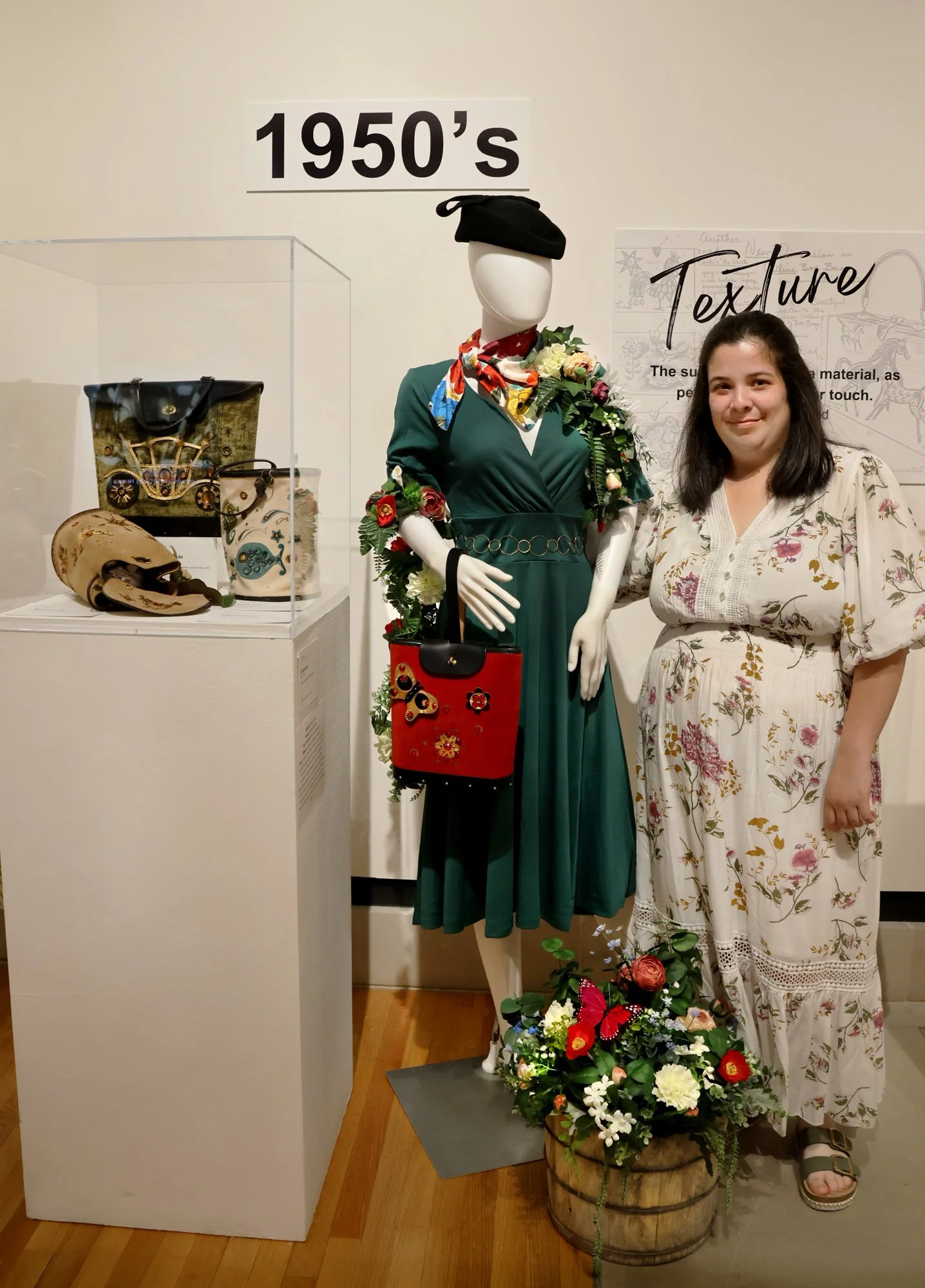
Floral Art student Yessenia Villalon, Horticulture major, introduces “Evelyn” and “Blooming Romance.”
Villalon’s idea for the texture of the time angled evoked romance with soft, draping foliage following the folds of her dress, and the softness of silk and suede.
Floral Artist Yessenia Villalon.
Free to use all the foliage and florals she wanted, Villalon chose some rough, some smooth, some soft.
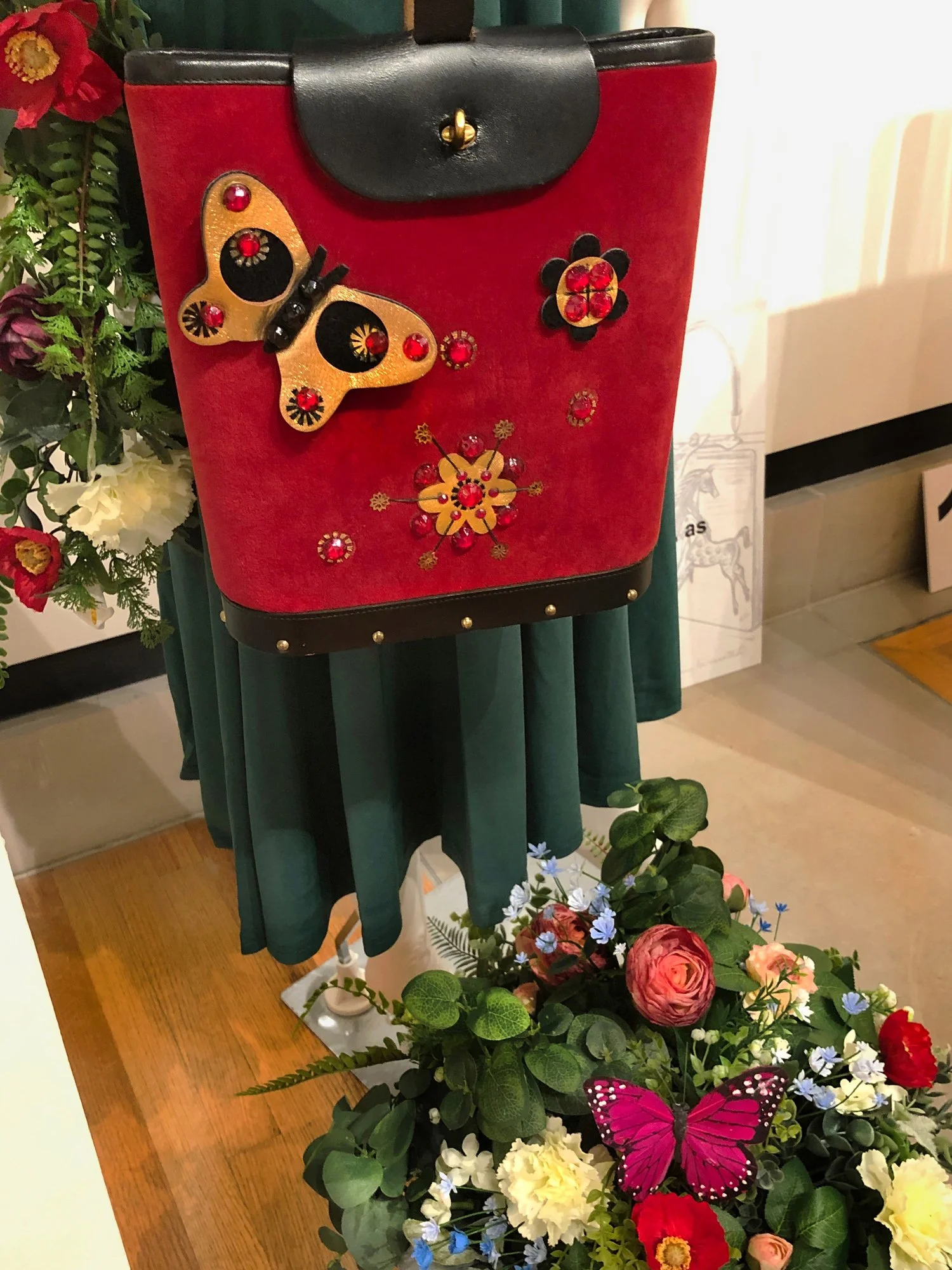
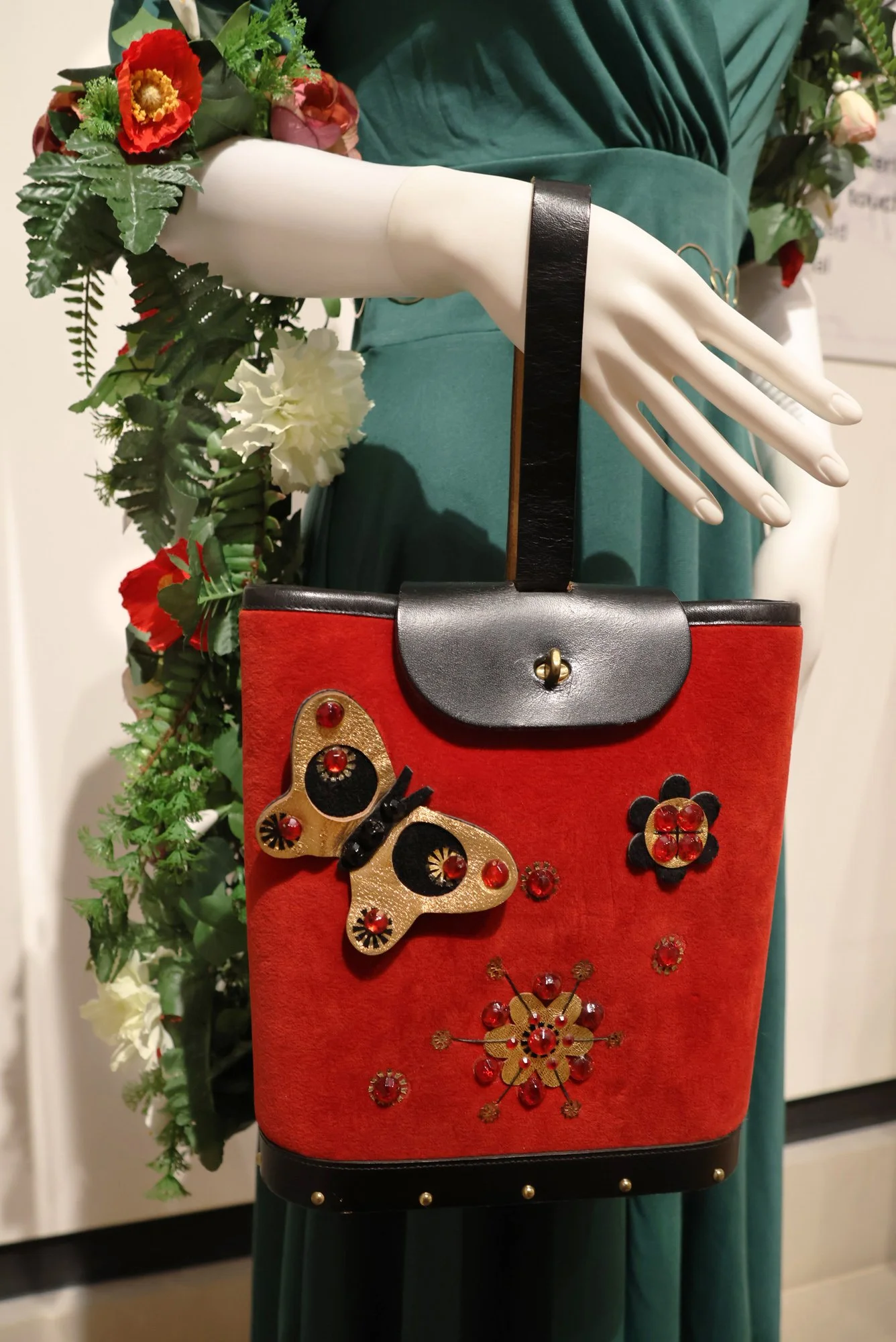
“butterfly tote” by Enid Collins (ca. early to mid 1950s).
The bags: “carriage trade” chenille tote (ca. mid 1950s), “in the swim” linen drawstring tote (1961), “bird feed bag” suede drawstring tote (1963)
Closer look at the textures of Enid’s bags.
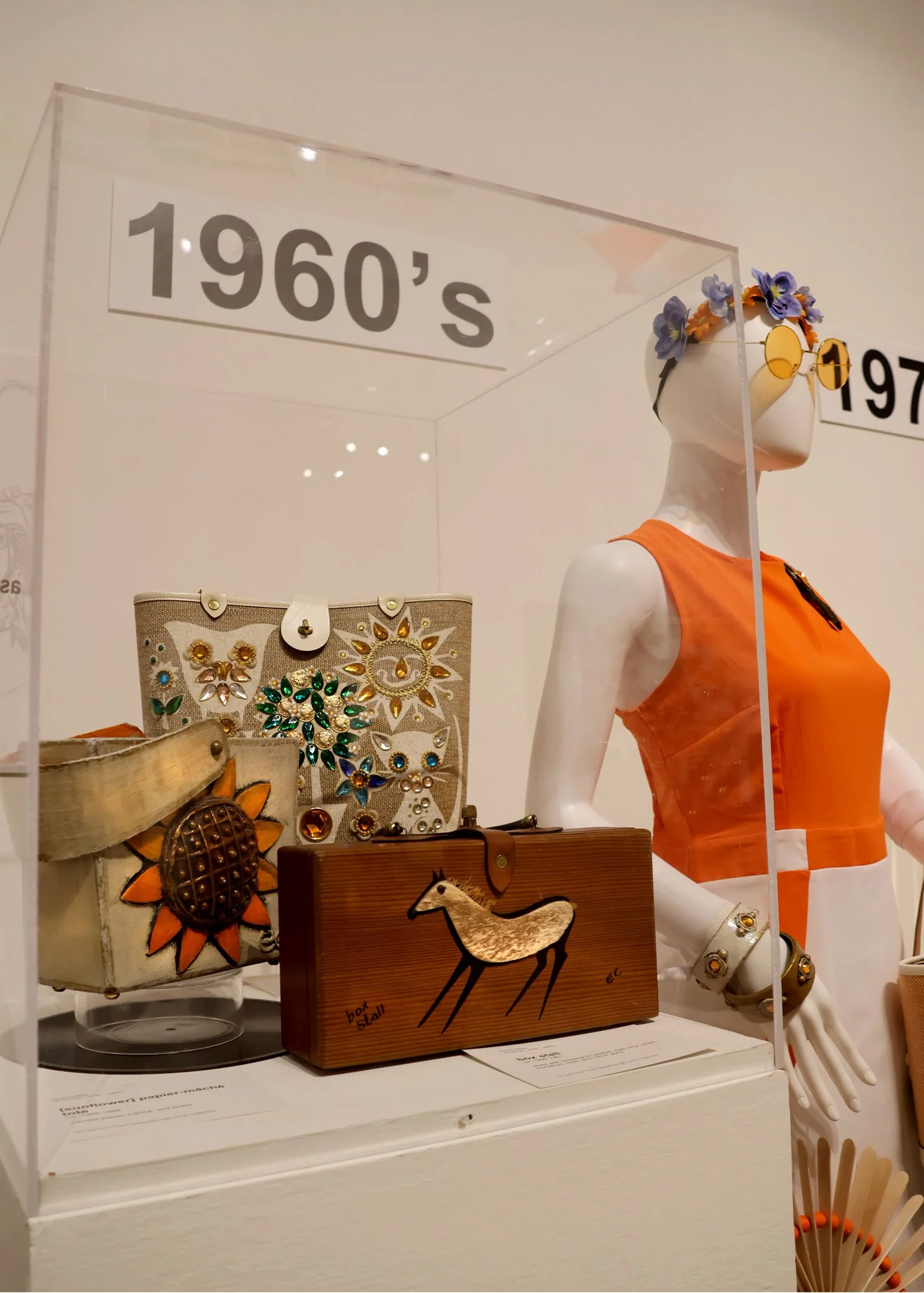
A new era of freedom and experimentation.
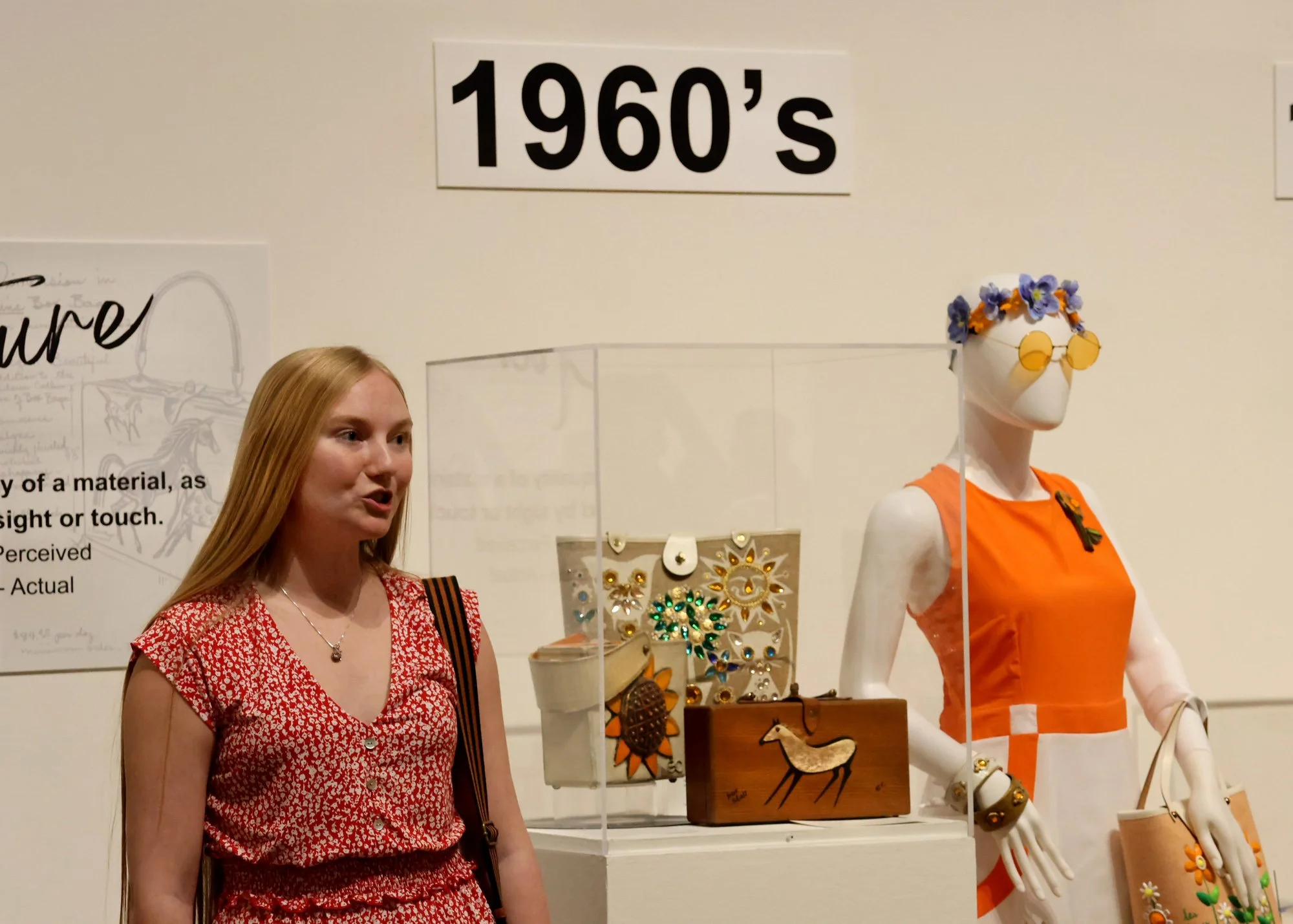
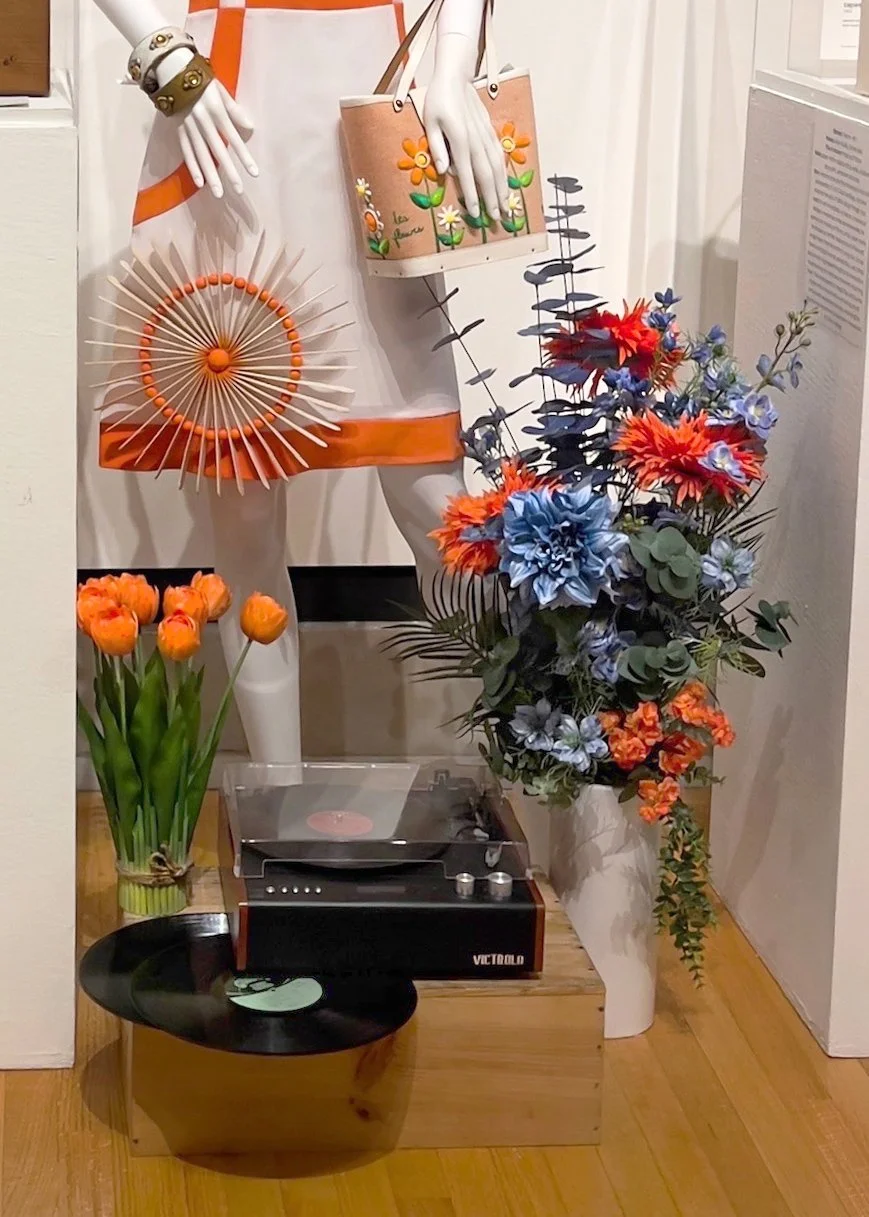
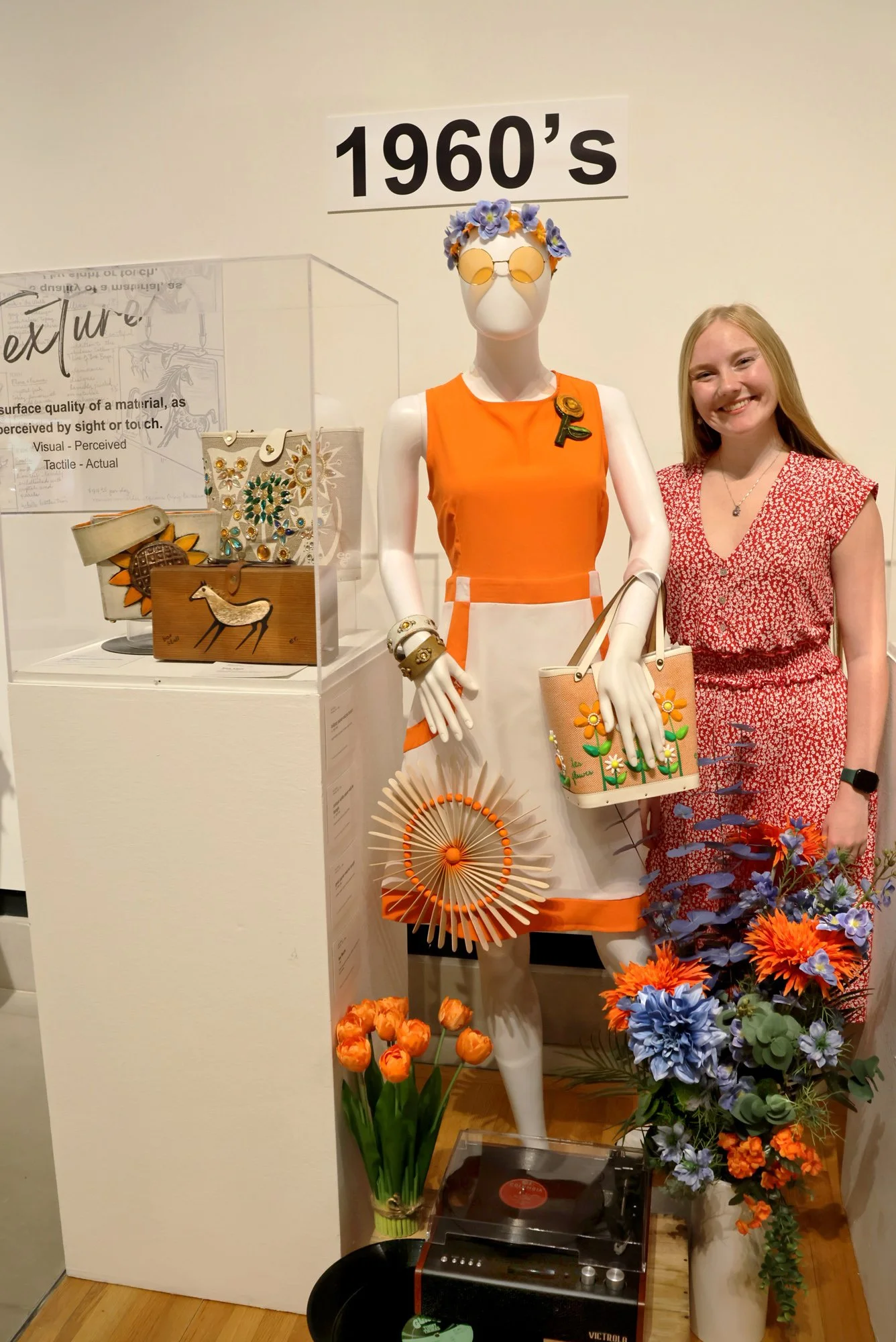
Floral Art student Brooke Isbell, majoring in Plant and Environmental Soil Science, introduces “Penny,” the star of “Petals and Platters.” (Abby Dudley collaborated on the piece but was unable to attend.)
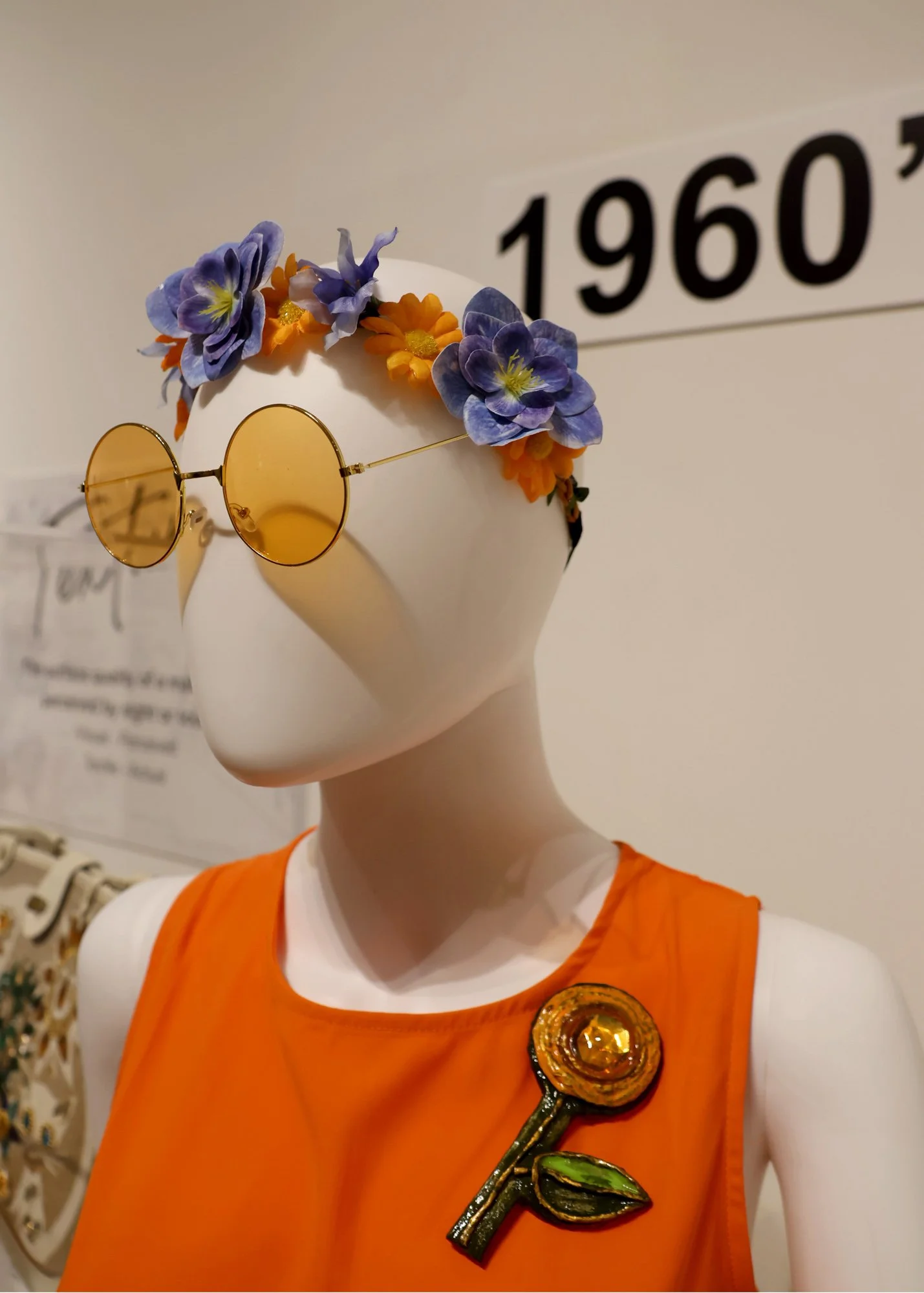
Inspired by the playful ornamentation and bold palettes of Enid Collins handbags and experimental accessories such as this papier maché brooch, the exhibit evokes the spirit of the 1960s.
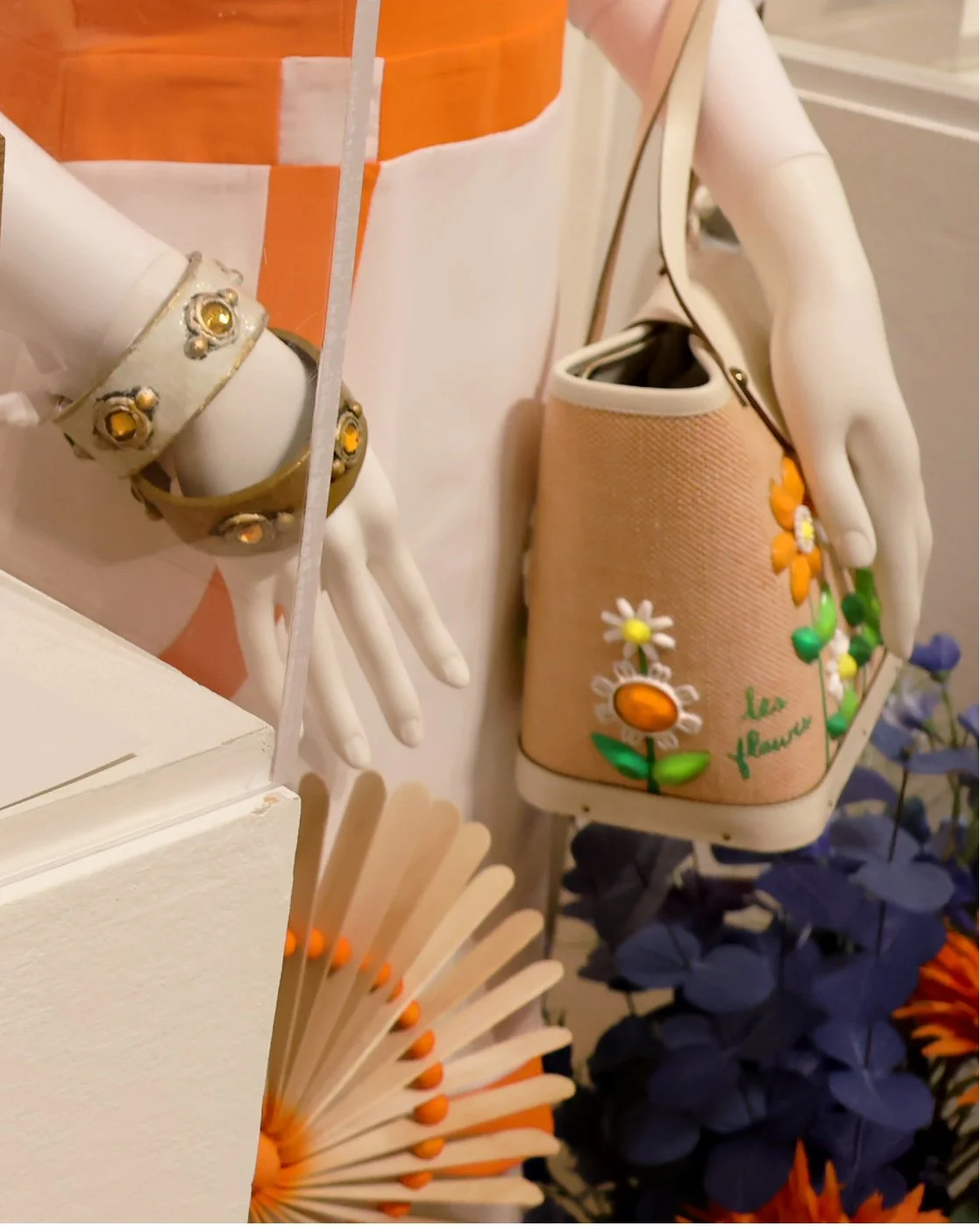
Circular forms consisting of records, painted discs, and crafted Popsicle-stick rings repeat throughout the composition, visually echoing the rhythm and movement of spinning music.
The limited palette of orange, blue and touches of green unifies the work while contrasting smooth surfaces with handcrafted textures.
Floral Artist Brooke Isbell.
A mannequin dressed in Creamsicle orange and white evokes the optimism and vibrancy of the era, also clear in Enid’s designs of the period.
The bags (clockwise from top): “collinsiana” linen canvas tote (1965), “box stall” box bag (ca. 1956-1961), [sunflower] papier maché tote (ca. 1966-1968)
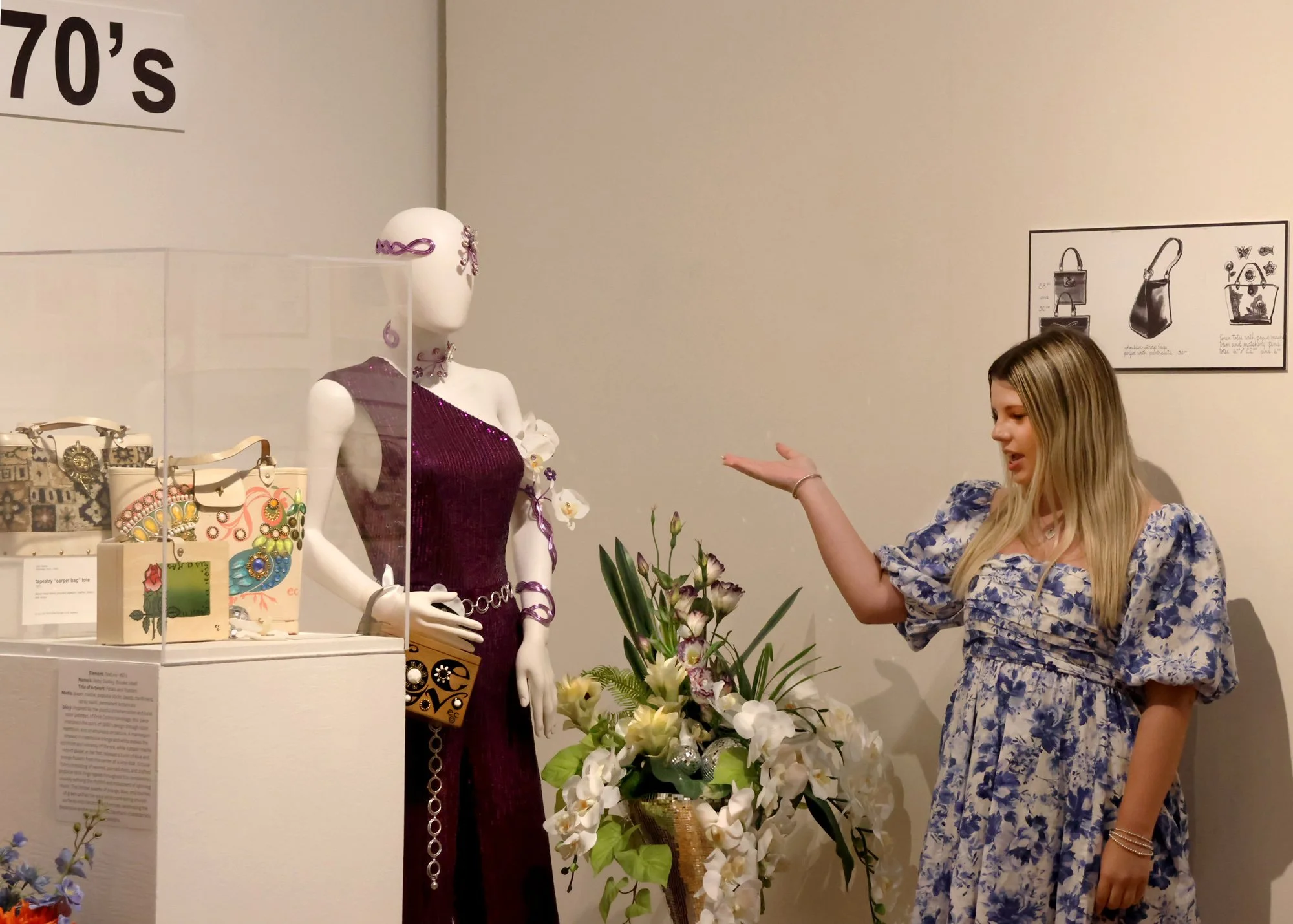
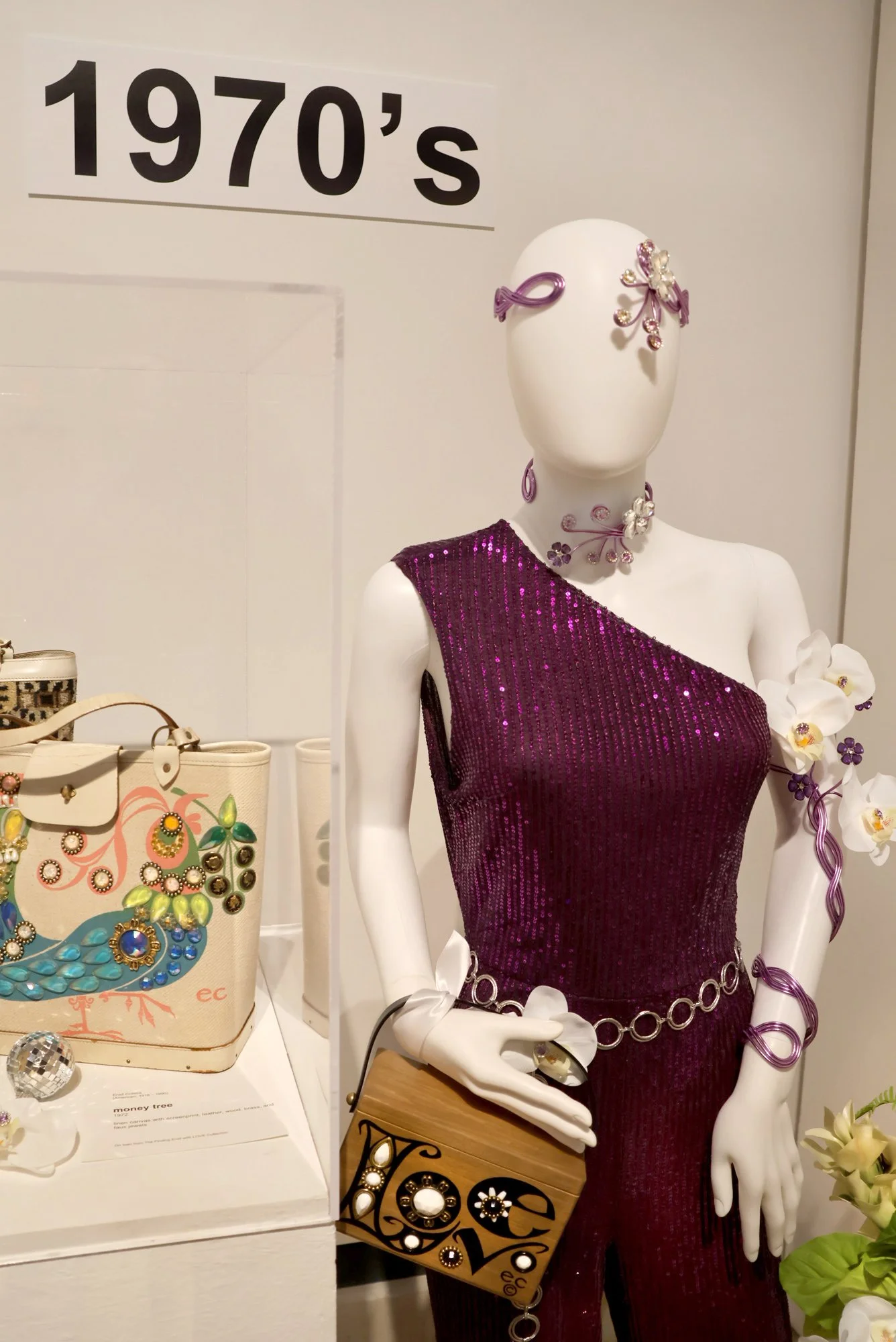
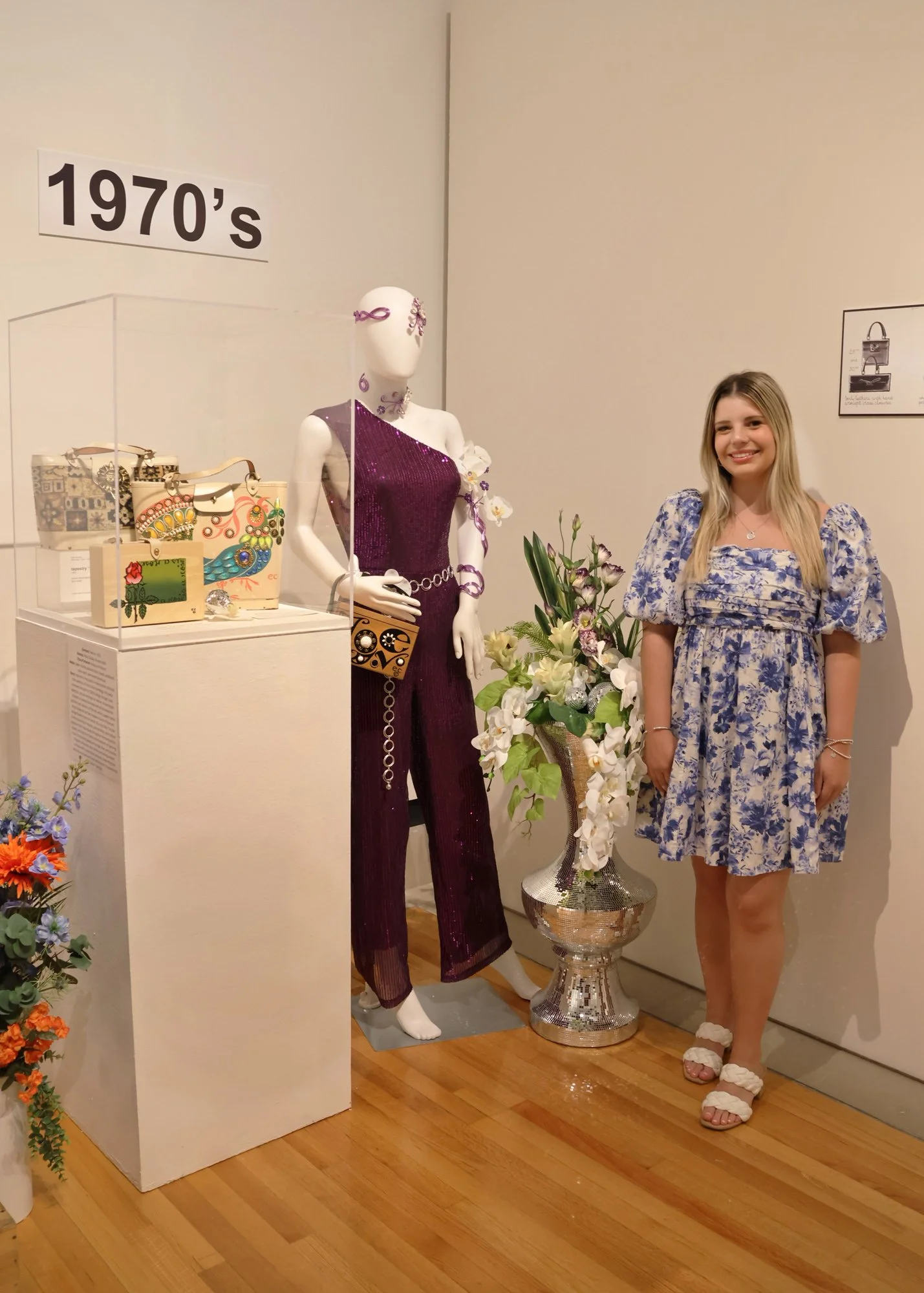
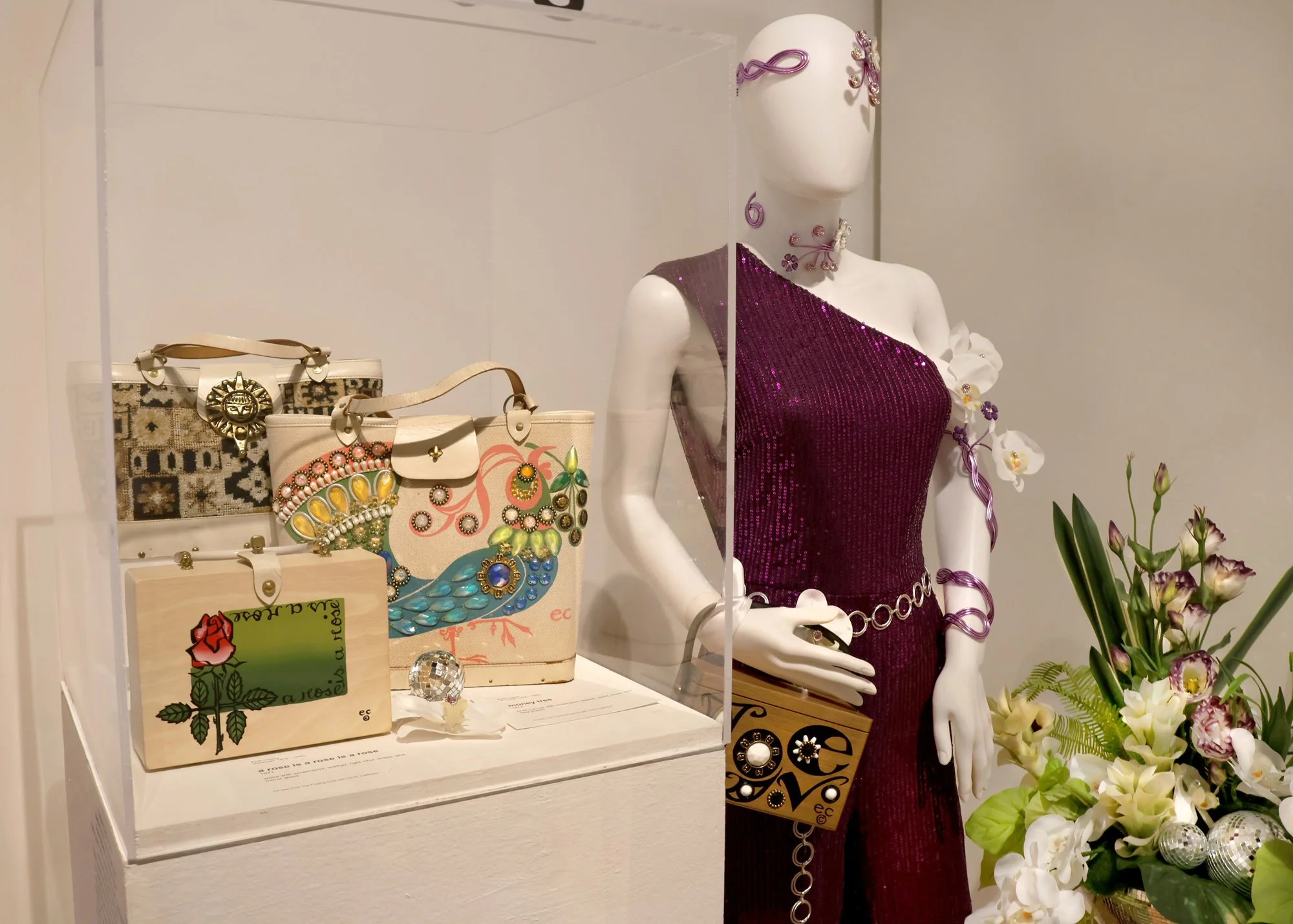
Sequins, rhinestones and mirror balls. A palette Enid would appreciate.
Floral Art student Presley Bivens introduces “Groovy Girl,” inspired by the arguably most famous Enid element: sparkle.
Sparkling elements including rhinestones, sequins and mirrors were placed to highlight the orchids in the design.
From the artist: “I personally love the color purple, everything sparkly and disco balls, so this was a perfect combination for me.”
Details of “Groovy Girl.”
Floral Artist Presley Bivens.
The bags (clockwise from top): “carpet bag” tapestry tote (1972), “money tree” linen canvas tote (1972), “a rose is a rose is a rose” box bag (1971)
Floral Artists with their stunning works.